Mercer Island is defined by its stunning waterfront views and tight-knit community, but for homeowners, it also presents a unique microclimate. The moisture coming off Lake Washington combined with our brisk winter temperatures creates a challenging environment for masonry. As the leaves begin to turn and the air grows crisp, your chimney transitions from a dormant architectural feature to a vital heating component.
A chimney that has sat idle through the damp spring and humid summer may have developed underlying issues that pose a fire or structural risk once the first log is lit. Identifying these issues early can be the difference between a minor tuckpointing job and a costly emergency rebuild in the middle of a December freeze. Here are the five critical signs that your Mercer Island chimney requires professional attention before winter arrives.
1. Spalling Bricks and Flaking Masonry
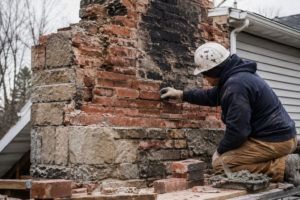
If you find bits of red clay or stone at the base of your chimney or scattered on your roof, you are looking at spalling. This occurs when moisture penetrates the porous surface of the brick. When the temperature drops, a common occurrence during Mercer Island winters, that trapped water freezes and expands, causing the face of the brick to pop off or crumble.
Spalling is more than just an eyesore; it is a signal that the structural integrity of the brick is dissolving. If left unaddressed, the damage will spread to neighboring bricks, eventually leading to a partial or total collapse. Because we live in a high-moisture region, ensuring your bricks are sound and treated with a professional-grade water repellent is essential.
2. Rusted Dampers or Firebox Staining
Water is the primary enemy of any chimney system. If you notice rust on your damper or “white staining” (efflorescence) on the interior bricks of your firebox, you have a moisture intrusion problem. Often, this is caused by a cracked chimney cap or failing flashing, the metal seal where the chimney meets your roofline.
According to the Chimney Safety Institute of America (CSIA), moisture combined with the caustic nature of soot creates an acidic slurry that eats away at mortar joints and metal components. If your damper is rusted, it may not seal properly, leading to massive heat loss and higher energy bills during the cold Mercer Island months.
3. Cracked or Deteriorated Mortar Joints
Take a close look at the “lines” between your bricks. This is the mortar, and it is designed to be slightly softer than the bricks themselves so it can sacrificially weather the elements. However, if you see deep cracks, holes, or sections where the mortar has turned into a sandy consistency, your chimney is “taking on water.”
This condition is often repaired through a process called tuckpointing. We carefully scrape out the old, decayed mortar and replace it with fresh, color-matched material. This restores the structural bond of the chimney. In areas like Mercer Island, where homes are often subjected to wind-driven rain, solid mortar joints are your first line of defense against interior water damage.
4. The Presence of “Chimney Odors”
Many homeowners believe that a smoky or musty smell coming from the fireplace is simply “part of owning a home.” In reality, a strong odor often indicates a buildup of creosote or a moisture problem. Creosote is a highly flammable byproduct of wood burning that coats the inside of your flue.
If your chimney smells like an old campfire during a rainstorm, it means the humidity is reacting with the creosote deposits. This isn’t just an olfactory nuisance; it’s a major fire hazard. The National Fire Protection Association (NFPA) recommends annual inspections to ensure these deposits are removed before they can ignite into a dangerous chimney fire.
5. A Cracked Chimney Crown
The chimney crown is the concrete slab that sits on the very top of your chimney structure. Its sole job is to shed water away from the masonry. Because it is the most exposed part of your home, it is often the first to fail. Small hairline cracks in the crown act as funnels, directing rainwater straight into the center of your chimney walls.
In the Pacific Northwest, a cracked crown can lead to rapid deterioration during the freeze-thaw cycles of January and February. Catching these cracks in the autumn allows for a relatively simple seal or resurfacing, preventing the need for a full masonry teardown later.
Why Mercer Island Residents Trust Chimneyz
Maintaining a chimney on the Island requires an understanding of local building codes and the specific challenges of lakeside living. At Chimneyz, we provide specialized masonry services tailored to the unique homes of our community. From historic estates to modern waterfront properties, our goal is to ensure your fireplace is a source of comfort, not a source of stress. Our technicians are experts in identifying the subtle precursors to major damage, saving you time and money.
Get Your Chimney Winter-Ready
Don’t wait until the first frost to discover a problem with your fireplace. A proactive inspection today can prevent hazardous chimney fires and expensive structural repairs tomorrow. Our Mercer Island team is ready to provide a thorough evaluation and expert repair services to keep your home safe and warm all season long. Contact Chimneyz today to schedule your professional chimney inspection and secure your peace of mind before winter arrives.