The attic is where most of a Pacific Northwest home loses its heat. Air sealing first, then insulation to depth, is the highest-return comfort upgrade in this climate.
Warm air moves upward and leaves through the top of the house. In a typical older Seattle-area home the attic floor is the single largest route out: insulation that has settled or been compressed over decades, bare patches where someone stored boxes or ran wiring, and dozens of unsealed penetrations where warm air simply walks out.
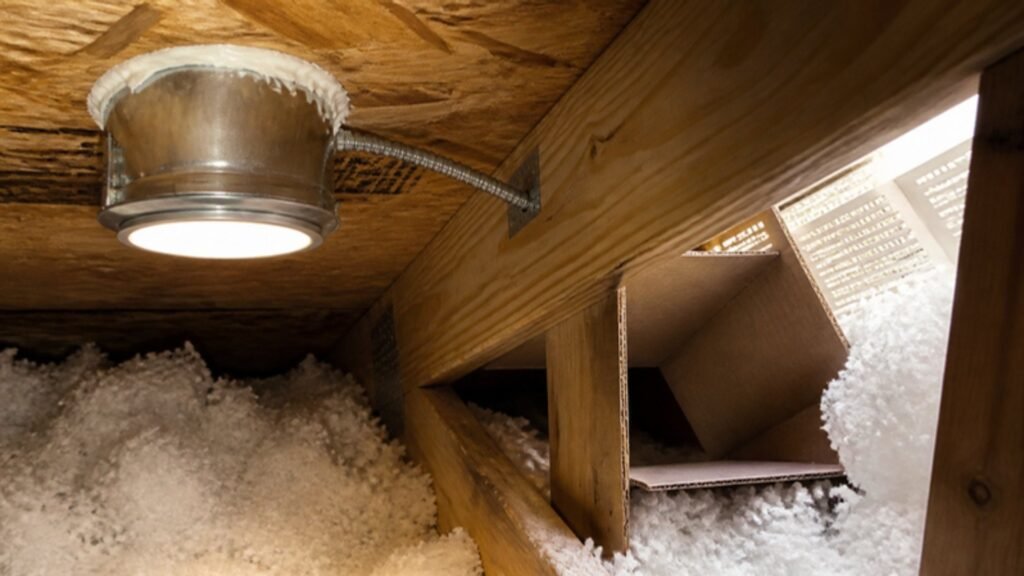
That is why insulation alone so often disappoints. Blowing new material over an unsealed ceiling plane is insulating a colander. Light fixtures, bath fans, plumbing stacks, the top plates of interior walls and the attic hatch itself are all open paths, and air moving through insulation carries heat past it as if it were not there. Air sealing first is what makes the insulation perform as rated.
What you feel afterwards is specific. Rooms that hold their temperature instead of cooling within an hour of the heat going off. Floors above unheated space that stop being cold. A furnace that cycles less. On most houses we work on, depth is well short of current recommendations and coverage is uneven, and correcting both is the least glamorous and highest-return thing you can do to the building.
How We Work
How We Insulate an Attic
Seal the holes, then add the depth. Doing it the other way round wastes most of the benefit.
Full system inspection
We measure existing depth and coverage, identify every penetration through the ceiling plane, and check for moisture, because insulating over a damp attic makes the moisture problem worse.
01
Define the Scope
You get the target depth and R-value, the air sealing list, the hatch detail and the baffles needed to keep soffit intake clear, so nothing is left to the installer on the day.
02
Execute the Repair
Penetrations sealed, recessed fixtures handled safely, baffles installed at the eaves, the attic hatch insulated and gasketed, then insulation installed to uniform specified depth.
03
Verify & Document
We confirm depth across the whole plane rather than at the hatch, check that soffit intake has not been blocked by the new material, and photograph the work.
04
Our Projects
Real WORK. REAL Results.
See how we’ve helped homeowners across Seattle and surrounding areas solve chimney, roofing, and masonry problems with clear scopes and lasting repairs.
Freestanding Gas Fireplace Installation in Mercer Island, WA
Mercer Island, WA
Why Chimneyz
We Check the Ventilation Before We Bury It
Insulation and ventilation are one system, and insulation installed without regard to airflow is how a dry attic becomes a wet one. We check intake and exhaust before adding depth, keep the soffits clear with baffles, and tell you if ventilation work needs to come first. Most insulation crews are not looking at the roof. We are.
GAF Certified Contractor
Factory-certified roofing installer with access to enhanced warranty coverage and proven materials.
BBB Accredited
Better Business Bureau accreditation with a commitment to ethical practices and customer satisfaction.
READY TO SOLVE THE FULL PROBLEM?
Get a Clear Inspection and the Right Repair Plan.
From chimney leaks and failing masonry to roofline issues and interior damage, Chimneyz helps homeowners identify the real source of the problem and fix it with one coordinated solution.
See how Chimneyz solves complex chimney, roofline, masonry, and restoration issues with clear scopes and high-quality execution.
FAQ
Attic Insulation FAQ
Attic insulation is the upgrade with the best return in this climate, and the easiest to do badly.
How much insulation should a Seattle attic have?
Considerably more than most older homes have. The practical answer is the depth that reaches current recommended R-value uniformly, which on most houses we see means adding substantially to what is there.
Can I just add on top of my existing insulation?
Often yes, provided the existing material is dry and uncontaminated and the air sealing is done first. Wet, mouse-damaged or compressed material should come out rather than be buried.
Why is air sealing more important than depth?
Because air moving through insulation carries heat straight past it. Sealing the penetrations is what allows the insulation to perform at the rating on the bag. It is also far cheaper than the insulation itself.
Will more insulation cause condensation?
It can, if ventilation is inadequate. A colder attic deck with warm moist air still reaching it is exactly the condensation recipe, which is why we check the ventilation before adding depth.
What difference will I actually notice?
Rooms that hold temperature between heating cycles, floors over unheated space that are no longer cold, and a furnace running less. It is the comfort change people comment on most.





 CALL NOW