When the brick is sound and the mortar between it has gone soft or fallen out, the fix is tuckpointing: cutting the failed joint back and replacing it with mortar matched to the wall.
Mortar is meant to be the softest thing in a masonry wall. The wall moves – thermally, seasonally, under load – and the joint absorbs that movement so the units do not have to. It also acts as the wall’s release valve for moisture. That means mortar has a service life and brick largely does not, and after several decades the joints on a Puget Sound house will be eroded, crumbling under a key, or recessed deep enough to hold standing water against the brick.
Once the joints open, the wall stops being a wall and becomes a collection of bricks. Water runs in behind the face, saturates the units, freezes, and starts spalling them. On a chimney it reaches the flue; on a wall it reaches the framing. The brick you are trying to protect gets destroyed by the joints you did not maintain, which is why tuckpointing at the right moment is the cheapest masonry work there is, and why leaving it is the most expensive.
Doing it properly means cutting the joint back to sound mortar – typically to a depth of about twice the joint width, not scraping the surface – cleaning the cut, and filling it in layers with a mortar matched to the original in strength, colour and texture. The strength match is not optional. A modern portland-rich mix is harder than the brick around it, and a joint harder than its units transfers movement into the brick and cracks it. Most of the badly damaged brick we are called to repair was damaged by a previous repointing job.
How We Work
How We Tuckpoint
Match the mortar to the wall, cut to real depth, fill in layers, finish to the original profile.
Full system inspection
We test the existing joints by hand and by key to find how far the softening goes, assess the brick itself for hardness and absorption, and identify any water source above the area that would undo the work.
01
Define the Scope
You get the elevations and areas to be pointed, the mortar specified to match the original in strength and colour, the joint profile to be reproduced, and what is being left alone because it is still sound.
02
Execute the Repair
Failed joints cut back to sound mortar at proper depth without damaging the brick arris, the cut cleaned out, then filled in layers and tooled to the existing profile once it has taken up.
03
Verify & Document
We check the cured joints for colour against the untouched wall and for a full, consistent fill, and photograph before and after so the match can be judged on the wall rather than described.
04
Our Projects
Real WORK. REAL Results.
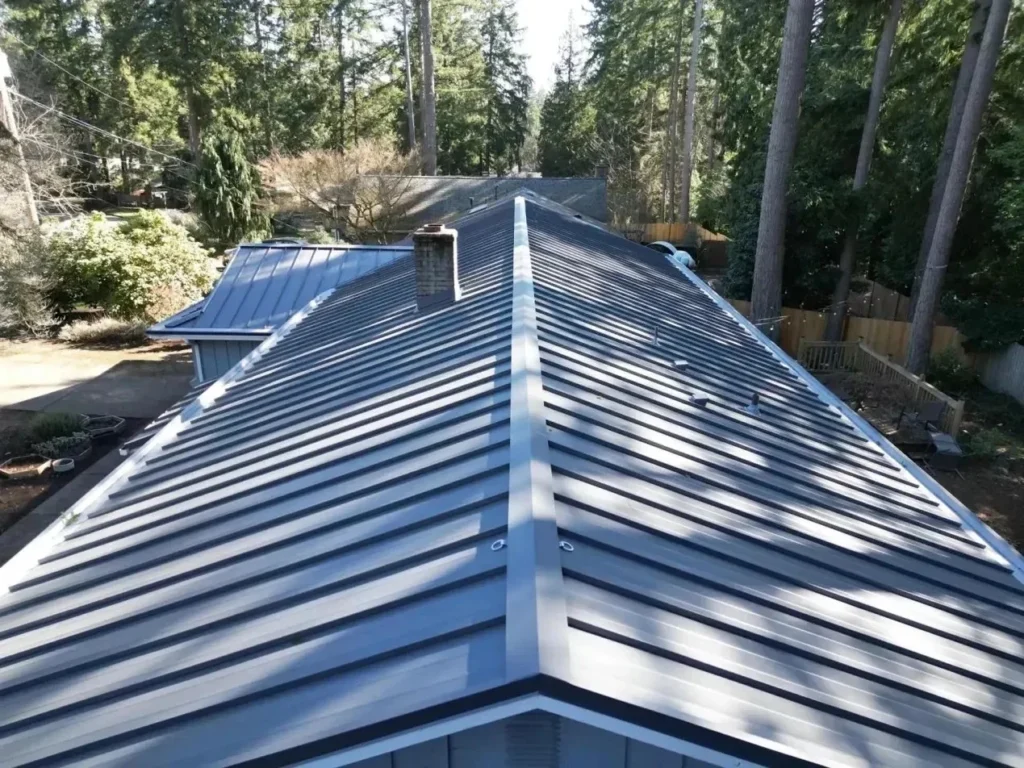
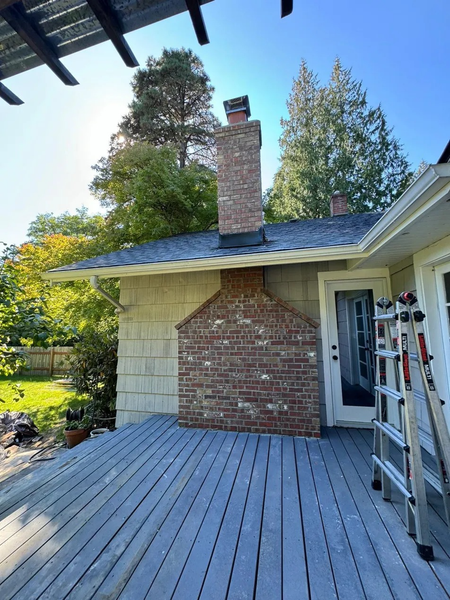
See how we’ve helped homeowners across Seattle and surrounding areas solve chimney, roofing, and masonry problems with clear scopes and lasting repairs.
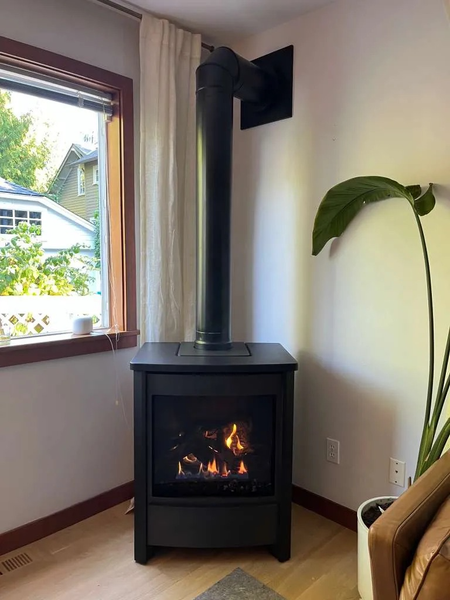
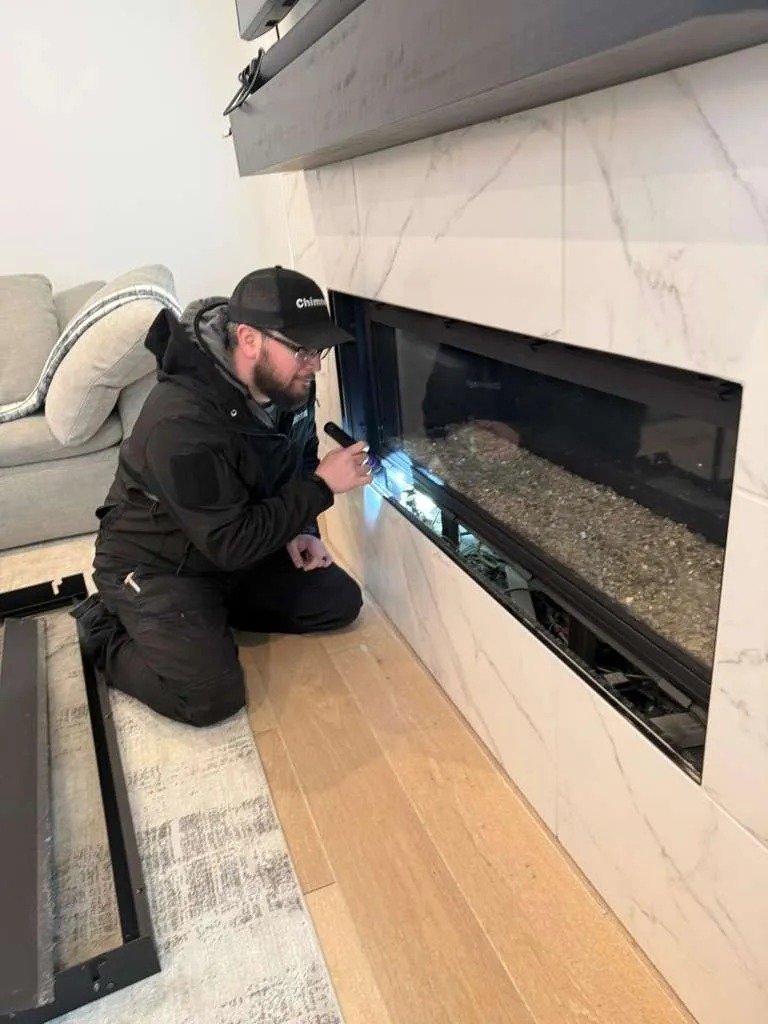
Freestanding Gas Fireplace Installation in Mercer Island, WA
Mercer Island, WA
Why Chimneyz
Mortar Matching Is Not Guesswork
We match mortar for strength first and colour second, and we tint to the wall rather than working from a bag. That habit comes from chimney work, where a joint harder than the brick will crack units within a few winters and there is nowhere to hide it. It is also why we will tell you if a previous repointing is the reason your brick is now spalling.
GAF Certified Contractor
Factory-certified roofing installer with access to enhanced warranty coverage and proven materials.
BBB Accredited
Better Business Bureau accreditation with a commitment to ethical practices and customer satisfaction.
READY TO SOLVE THE FULL PROBLEM?
Get a Clear Inspection and the Right Repair Plan.
From chimney leaks and failing masonry to roofline issues and interior damage, Chimneyz helps homeowners identify the real source of the problem and fix it with one coordinated solution.
See how Chimneyz solves complex chimney, roofline, masonry, and restoration issues with clear scopes and high-quality execution.
FAQ
Tuckpointing FAQ
Tuckpointing is simple to describe and easy to do badly. Here is what separates the two.
What is tuckpointing?
Cutting deteriorated mortar out of the joints and replacing it with fresh mortar matched to the wall. The brick stays. It restores the joint that keeps water out and lets the wall move.
How do I know when my joints need it?
Mortar that crumbles when you press a key into it, joints recessed noticeably behind the brick face, sand collecting at the base of the wall, or daylight and gaps visible in the joint line.
Can you just fill over the old mortar?
No. Mortar skimmed over a soft joint has nothing to bond to and comes off in sheets within a few seasons. The joint has to be cut back to sound material before anything goes in.
Will the new mortar match?
That is the measure of the job. We match colour, texture and joint profile, and we match strength to the original so the new joints stay softer than the brick. New work lightens slightly as it cures.
How long does tuckpointing last?
Properly cut, correctly matched and with the water source above it corrected, it is measured in decades. Where it fails early it is almost always depth – a surface skim – or mortar too hard for the brick.




 CALL NOW