Fiber cement is the default cladding in the Pacific Northwest for a reason: it does not rot, it does not feed anything, and it holds paint through wet winters. Installed correctly, it is close to a lifetime decision.
Fiber cement is cement, sand and cellulose pressed into board. It does not rot, insects have no interest in it, and it will not burn. In a climate where walls stay damp for months and moss grows on anything porous, those three properties matter more than they do almost anywhere else in the country, which is why it has become the standard here.
It also holds a finish exceptionally well. Factory-finished boards arrive with a coating applied under controlled conditions that no site painting matches, and repaint cycles are long. It is dimensionally stable, so joints do not open and close with every wet and dry spell. Against wood it costs more up front and gives most of that back in maintenance; against vinyl it costs more and looks substantially better doing it.
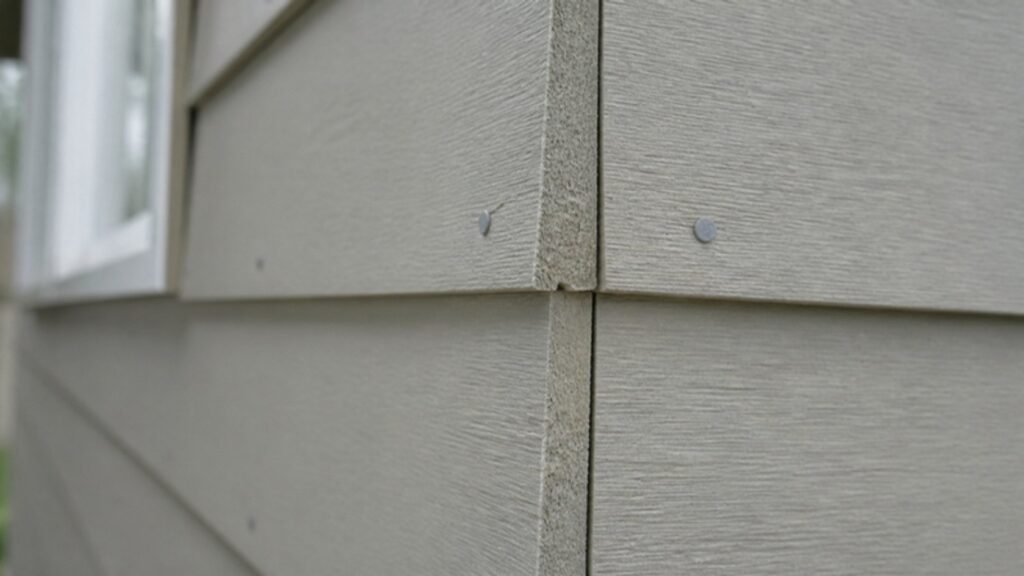
The one thing fiber cement is unforgiving about is installation. It needs the specified clearance above grade, decks and roofing, correct fastener placement, proper joint treatment and a real drainage plane behind it. Boards cut and hung without those details will take on water at the edges and fail at the bottom course regardless of how good the material is. Most fiber cement problems we are called to are installation, not product.
How We Work
How We Specify and Install It
The material is forgiving of weather and unforgiving of shortcuts, so the detailing gets the attention.
Full system inspection
We look at exposure, elevation by elevation, and at the wall going behind the cladding, then specify profile, finish and whether factory-finished or site-painted makes sense for your house.
01
Define the Scope
You get the product line, profile, finish, joint treatment, clearances and drainage detail in writing, so you can compare quotes on something other than price per square foot.
02
Execute the Repair
Barrier and drainage plane first, then flashing at every opening and junction, then boards cut, fastened and joint-treated to the manufacturer specification rather than to whatever is fastest.
03
Verify & Document
We check clearances at grade, roof and deck, confirm joints and cut edges are sealed properly, and photograph the assembly behind the boards before it is covered.
04
Our Projects
Real WORK. REAL Results.
See how we’ve helped homeowners across Seattle and surrounding areas solve chimney, roofing, and masonry problems with clear scopes and lasting repairs.
Freestanding Gas Fireplace Installation in Mercer Island, WA
Mercer Island, WA
Why Chimneyz
Specified Against Your Walls, Not a Brochure
A north elevation under trees and a south elevation in full sun are not the same wall and should not always get the same finish. We specify based on what your house actually faces, install to the manufacturer requirements that keep the warranty intact, and handle the chimney and roofline junctions ourselves rather than leaving them to a siding crew.
GAF Certified Contractor
Factory-certified roofing installer with access to enhanced warranty coverage and proven materials.
BBB Accredited
Better Business Bureau accreditation with a commitment to ethical practices and customer satisfaction.
READY TO SOLVE THE FULL PROBLEM?
Get a Clear Inspection and the Right Repair Plan.
From chimney leaks and failing masonry to roofline issues and interior damage, Chimneyz helps homeowners identify the real source of the problem and fix it with one coordinated solution.
See how Chimneyz solves complex chimney, roofline, masonry, and restoration issues with clear scopes and high-quality execution.
FAQ
Fiber Cement Siding FAQ
Fiber cement is the material most homeowners here end up choosing. These are the questions that come first.
How long does fiber cement last in this climate?
Decades, and the limiting factor is usually the finish rather than the board. It does not rot or host insects, so with correct clearances and flashing it routinely outlasts the people who chose it.
Does it need painting?
Factory-finished boards arrive coated and go a long time before a repaint. Site-painted fiber cement needs recoating sooner. Either way, the repaint cycle is considerably longer than wood in this climate.
Is it better than vinyl?
For appearance, impact resistance and resale, clearly. Vinyl costs less and installs faster. The honest comparison is up-front cost against decades of appearance and maintenance, which we go through with you.
Can fiber cement be installed over existing siding?
We do not recommend it. It is heavy, it needs correct fastening into structure, and covering the old wall prevents the drainage plane and hides any rot. A tear-off is the right way to do it.
Why is my existing fiber cement failing at the bottom?
Almost always clearance. Boards run tight to grade, a deck or roofing wick moisture upward through the cut edge. The board is fine; the installation left it standing in water.





 CALL NOW