Gas Fireplace Installation in the Seattle Area, WA.
Gas changes where a fireplace can go, because a sealed direct-vent unit can vent through a wall. That one fact opens up rooms a wood fireplace could never serve.
The thing worth understanding about a modern gas fireplace is that most of them are sealed. A direct-vent unit has a glass front that stays closed and a single coaxial pipe that draws combustion air in from outside and pushes exhaust back out through the same penetration. Nothing is taken from the room and nothing is released into it. Because that pipe can run horizontally through an exterior wall, a gas fireplace can be installed on a ground floor, in a bedroom wall, in a basement – places where a vertical masonry flue was never going to happen.
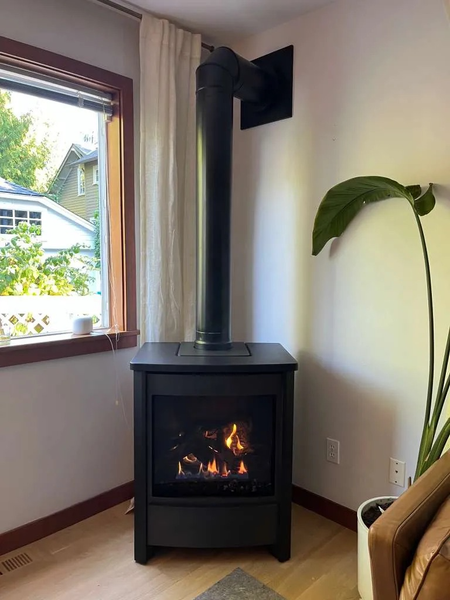
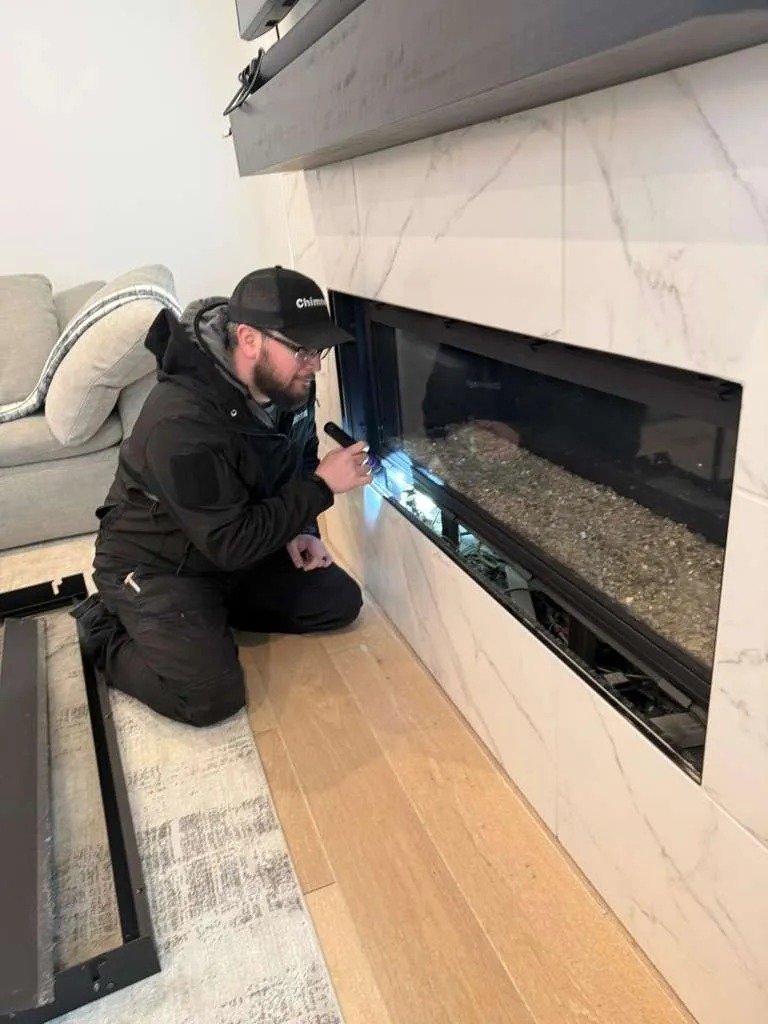
The other real choice is the form. A built-in unit is framed into a wall, finished with a surround, and looks like it was always there. An insert is built to slide into an existing masonry firebox, with a liner run up the existing flue, and is the usual answer when there is already a fireplace. A freestanding stove sits in the room on a hearth pad and vents behind or above it. All three are gas; they are different installations.
What has to be right either way is the gas supply, the vent termination and the clearances. The line has to be sized for the unit’s input rather than teed off whatever is nearest. The termination outside has to keep its distance from windows, doors, soffits and anything that will be walked past, and it has to be flashed where it leaves the building, which is a roofing detail as much as a gas one. We handle the line, the vent and the masonry as one job.
How We Work
How We Install a Gas Fireplace
Size the line, plan the vent, set the clearances, then build the face.
Full system inspection
We look at where the gas is now and what it can carry, what vent route the location allows, and whether a built-in, an insert or a freestanding unit is the sensible answer for the room.
01
Define the Scope
You get the unit and its venting type specified, the gas line route and sizing stated, the termination location agreed, and the finish work priced with it rather than after it.
02
Execute the Repair
Gas line run and sized to the unit, the vent installed and properly flashed where it leaves the building, the unit set to its listed clearances, and the surround and hearth built to suit.
03
Verify & Document
We confirm the vent terminates at its required clearances, operate the unit, check the flashing at the penetration, and hand over the documentation and photographs of the concealed work.
04
Our Projects
Real WORK. REAL Results.
See how we’ve helped homeowners across Seattle and surrounding areas solve chimney, roofing, and masonry problems with clear scopes and lasting repairs.
Freestanding Gas Fireplace Installation in Mercer Island, WA
Mercer Island, WA
Why Chimneyz
The Vent Has to Be Flashed
The weak point of a gas fireplace installation is not the gas – it is the hole in the wall or roof the vent goes through, which is a flashing detail and leaks like any other if it is sealed rather than flashed. That is roofing work, and it is ours, so the penetration gets detailed properly instead of being left to whoever comes next.
GAF Certified Contractor
Factory-certified roofing installer with access to enhanced warranty coverage and proven materials.
BBB Accredited
Better Business Bureau accreditation with a commitment to ethical practices and customer satisfaction.
READY TO SOLVE THE FULL PROBLEM?
Get a Clear Inspection and the Right Repair Plan.
From chimney leaks and failing masonry to roofline issues and interior damage, Chimneyz helps homeowners identify the real source of the problem and fix it with one coordinated solution.
See how Chimneyz solves complex chimney, roofline, masonry, and restoration issues with clear scopes and high-quality execution.
FAQ
Gas Fireplace Installation FAQ
Gas fireplaces are simpler to live with and less forgiving to install badly.
What is a direct-vent gas fireplace?
A sealed unit with a fixed glass front and one coaxial pipe that brings combustion air in and takes exhaust out. Because nothing is drawn from the room, it can vent horizontally through an exterior wall.
Do I need a chimney for a gas fireplace?
Not for a direct-vent unit. That is the main reason gas opens up locations a wood fireplace cannot serve. An insert going into an existing masonry fireplace does use the old flue, with a liner run up it.
What is the difference between a gas insert and a gas fireplace?
An insert slides into an existing masonry firebox and uses the existing flue. A gas fireplace is a complete unit framed into a wall, which can go where there was never a fireplace at all.
Can a gas fireplace heat a room properly?
A direct-vent unit sized for the space, yes – it is a sealed appliance with real output. Sizing matters in both directions; a unit too large for a room is as much of a problem as one too small.
Where can the vent come out?
Where it keeps its required distances from windows, doors, soffits, decks and walkways. That constraint, more than anything else, decides which wall the fireplace ends up on.




 CALL NOW