New siding is a weather barrier before it is a finish. We install the drainage plane, the flashings and the clearances that decide whether your walls stay dry, then hang the cladding over them.
The Parts You Never See Are the Parts That Fail First.
Siding installation is four layers, and only one of them is visible. Against the sheathing goes a weather-resistive barrier. Over that, in Pacific Northwest practice, a drainage gap so water that gets behind the cladding can run out instead of sitting against wood. Then flashing at every opening, every transition and every penetration. Only then the siding itself.
Almost every siding failure we are called to repair is a failure in one of the first three layers. Head flashing missing above a window. A kick-out flashing left off where a roof edge meets a wall, so the whole roof plane drains into the siding. Cladding run tight to the deck or the grade with no clearance, wicking moisture upward for years. Fasteners driven through the barrier and never sealed.
We install new siding on additions, new construction, and walls being re-clad after structural or water damage repair. The order matters: the wall gets inspected and dried, the barrier and drainage plane go on correctly, the flashings get integrated in sequence, and the cladding is fastened to the manufacturer pattern rather than to whatever is quickest. That sequence is the difference between thirty years and eight.
How We Work
How We Install Siding
Installation is sequencing work. Each layer has to be right before the next one covers it for good.
Full system inspection
We check what the new siding is going onto: sheathing condition, framing, existing barrier, and whether any moisture is already present. Cladding over a wet or damaged wall seals the problem in.
01
Define the Scope
You get the material, the barrier and drainage detail, the flashing schedule and the clearances in writing, with the reasoning for each, before anything is ordered.
02
Execute the Repair
Weather-resistive barrier, drainage plane, then flashing integrated in the correct order at every window, door, roof-to-wall junction and penetration, then the cladding fastened to the manufacturer pattern.
03
Verify & Document
We check clearances at grade, roof and deck, confirm every opening is flashed and every penetration sealed, and photograph the barrier and flashings before the cladding hides them permanently.
04
Our Projects
Real WORK. REAL Results.
See how we’ve helped homeowners across Seattle and surrounding areas solve chimney, roofing, and masonry problems with clear scopes and lasting repairs.
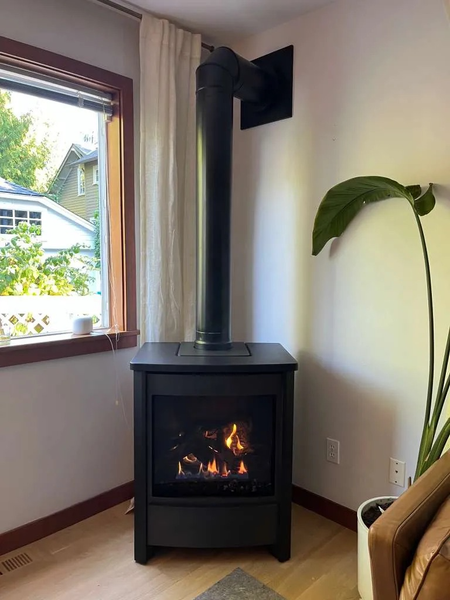
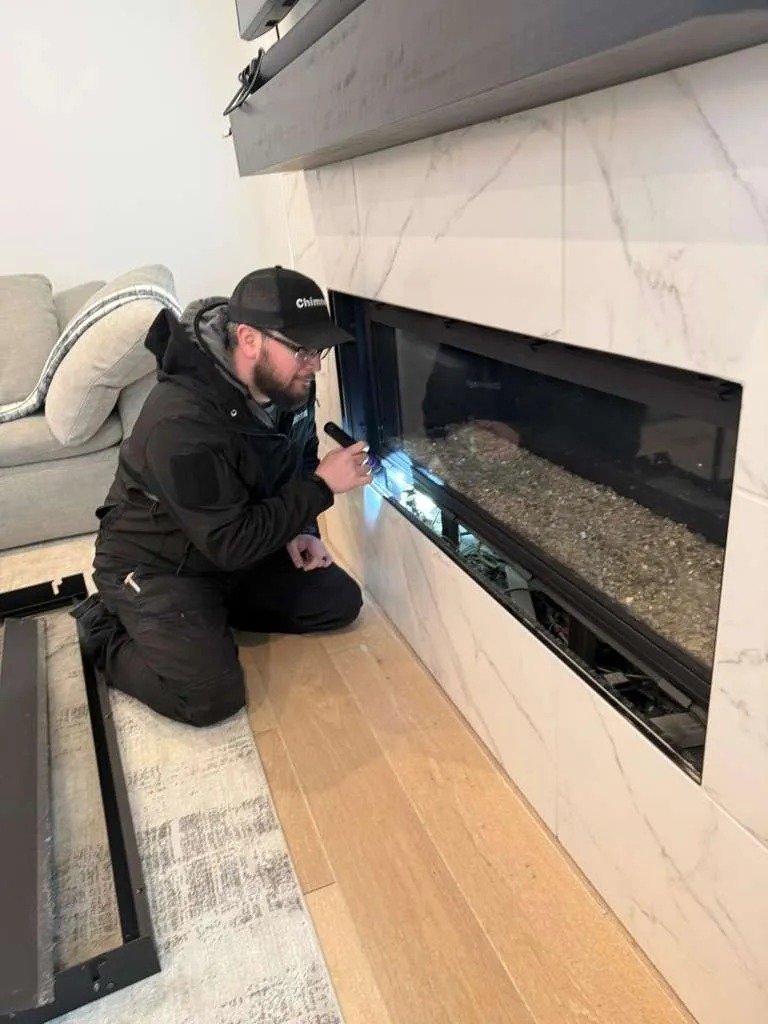
Freestanding Gas Fireplace Installation in Mercer Island, WA
Mercer Island, WA
Why Chimneyz
We Know Where Siding Meets Everything Else
The hardest part of a siding job is not the field of the wall. It is the junctions: siding to chimney, siding to roof, siding to foundation. Those are exactly the details most siding crews subcontract or guess at, and they are the details we work on every week. One licensed Washington team handles the masonry, the roofline and the cladding, so nobody is blaming the other trade in two winters.
GAF Certified Contractor
Factory-certified roofing installer with access to enhanced warranty coverage and proven materials.
BBB Accredited
Better Business Bureau accreditation with a commitment to ethical practices and customer satisfaction.
READY TO SOLVE THE FULL PROBLEM?
Get a Clear Inspection and the Right Repair Plan.
From chimney leaks and failing masonry to roofline issues and interior damage, Chimneyz helps homeowners identify the real source of the problem and fix it with one coordinated solution.
See how Chimneyz solves complex chimney, roofline, masonry, and restoration issues with clear scopes and high-quality execution.
FAQ
Siding Installation FAQ
New siding is a long commitment, and the questions below decide how long it actually lasts.
Does new siding need a gap behind it?
In this climate, almost always. A drainage gap lets water that gets past the cladding run out instead of standing against the sheathing. It is the single detail that most separates siding that lasts from siding that does not.
Can you install new siding over the old?
It is possible with some materials, and it is usually the wrong call here. Covering the existing wall hides any rot, prevents a proper barrier and drainage plane, and makes the next repair far more expensive.
How long does a siding installation take?
For a typical home, usually one to two weeks depending on size, the number of openings and whether repairs are found once the old cladding is off. We confirm the schedule after the wall is opened.
What clearance does siding need at the ground?
Manufacturers specify a gap above grade, decks and roofing, and it is routinely ignored. Siding run tight to a surface wicks moisture upward and rots from the bottom edge, which is a repair we see constantly.
Do you install during the wet season?
Yes, with weather protection and careful staging, because the wall is never left open overnight unprotected. Larger tear-offs are easier in drier months, and we will tell you when waiting is genuinely worth it.




 CALL NOW