Mold on the sheathing, frost in the attic, a roof that ages early. Almost always the same cause: air is going in or out in the wrong places, or not moving at all.
A roof assembly is supposed to breathe in a specific direction: cool outside air enters low at the soffits, moves up the underside of the deck, and leaves high at the ridge. That flow carries away moisture that reaches the attic from the house below. When it works, the sheathing stays dry through the wettest months. When it does not, moist air condenses on cold plywood and stays there.
The failures are consistent. Soffit vents blocked by insulation pushed into the eaves. Ridge venting absent, painted shut or short. Intake and exhaust badly unbalanced so the attic pulls air from the house rather than from outside. Bathroom and kitchen fans ducted into the attic instead of through the roof, which is simply pumping warm wet air into a cold box. Any of these produces dark staining across whole planes of sheathing, and homeowners are told they have a roof leak.
The distinction matters because the fixes are completely different. A roof leak stains a contained area and traces back to a specific entry point. Condensation stains broadly, evenly, often across a whole north-facing plane, and it will come straight back after any amount of roof work. Poor ventilation also shortens roof life from underneath, ages the sheathing, and is the most common cause of ice at the eaves in a cold snap.
How We Work
How We Correct Attic Ventilation
Establish the path, balance it, and remove whatever is putting moisture into the space.
Full system inspection
We measure intake against exhaust, check every soffit for blockage, look at ridge and roof venting, and trace where bath and kitchen fans actually terminate.
01
Define the Scope
The scope states the intake and exhaust required for your roof area, what is being added or cleared, and any duct that has to be re-routed through the roof rather than into the attic.
02
Execute the Repair
Soffit intake cleared and baffled, ridge or roof exhaust added or corrected to balance it, fans ducted properly to the exterior, and any mixing of intake and exhaust types resolved.
03
Verify & Document
We confirm air moves from soffit to ridge, check the sheathing for active moisture, and photograph the corrected intake and exhaust at both ends of the path.
04
Our Projects
Real WORK. REAL Results.
See how we’ve helped homeowners across Seattle and surrounding areas solve chimney, roofing, and masonry problems with clear scopes and lasting repairs.
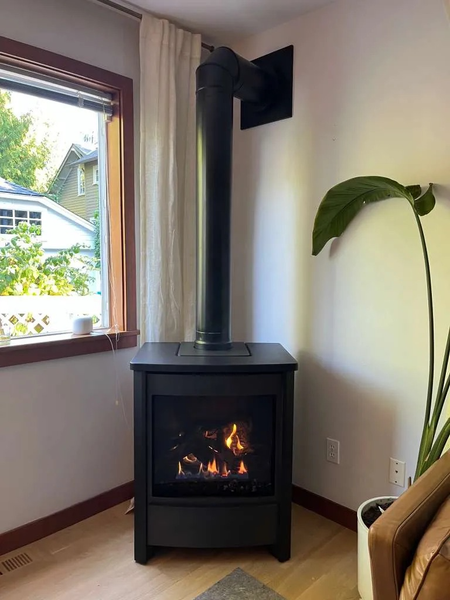
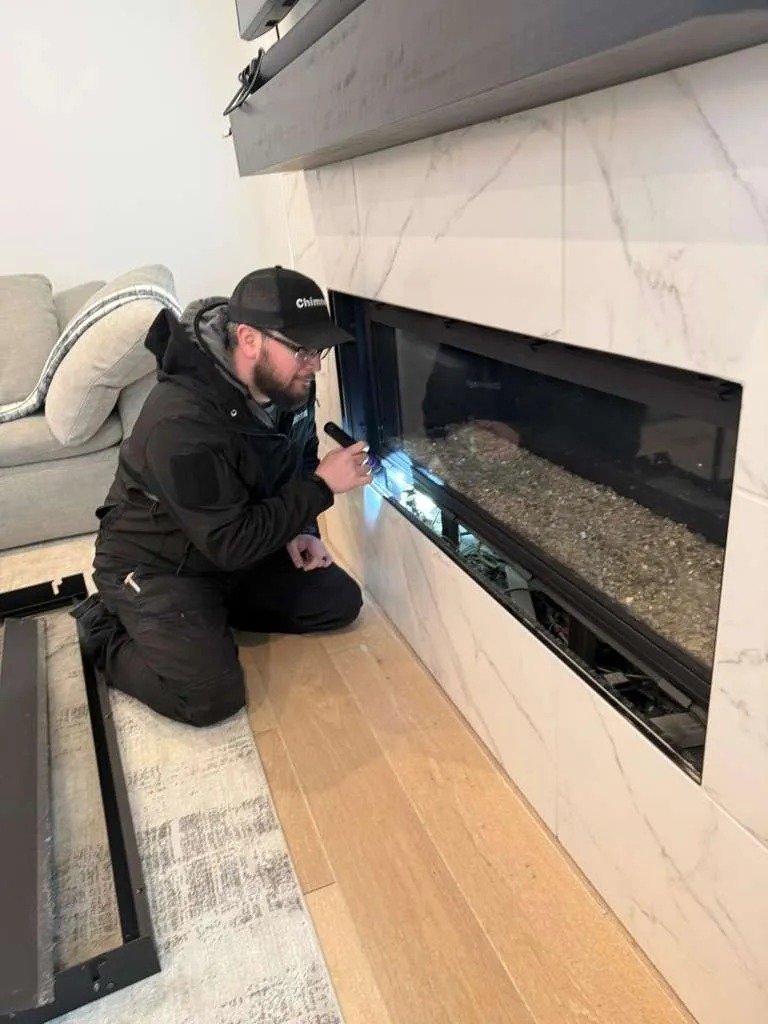
Freestanding Gas Fireplace Installation in Mercer Island, WA
Mercer Island, WA
Why Chimneyz
We Can Tell a Leak From Condensation
Because we work on the roof, the attic and the chimney, we can say which problem you actually have rather than guessing from a stain. That matters: homeowners regularly pay for roof repairs that were never going to help, because the water was condensing inside the attic rather than entering from above it.
GAF Certified Contractor
Factory-certified roofing installer with access to enhanced warranty coverage and proven materials.
BBB Accredited
Better Business Bureau accreditation with a commitment to ethical practices and customer satisfaction.
READY TO SOLVE THE FULL PROBLEM?
Get a Clear Inspection and the Right Repair Plan.
From chimney leaks and failing masonry to roofline issues and interior damage, Chimneyz helps homeowners identify the real source of the problem and fix it with one coordinated solution.
See how Chimneyz solves complex chimney, roofline, masonry, and restoration issues with clear scopes and high-quality execution.
FAQ
Attic Ventilation FAQ
Attic ventilation causes problems that look like other problems. Here is how to tell them apart.
Is black staining on my sheathing a roof leak?
Usually not. A leak stains a contained area below a specific entry point. Condensation stains broadly and evenly, often across a whole plane, and it returns after any roof repair because the roof was never the cause.
How do insulation and ventilation interact?
They are one system. Insulation keeps heat in the house, ventilation keeps the attic dry and cold. Add insulation without protecting the airflow and you have built a colder surface for moisture to condense on.
Do I need more vents or better balance?
Balance, far more often. Exhaust without matching intake pulls air from the house instead of outside, which makes the moisture problem worse. Counting vents is not the same as measuring the system.
Where should my bathroom fan vent to?
Through the roof or a wall, to the outside, always. A fan ducted into the attic is delivering warm wet air into a cold space, and it is one of the most common causes of attic mold we find.
Can poor ventilation shorten my roof life?
Yes. Heat and moisture trapped against the underside of the deck age sheathing and shingles from below, and in a cold snap they are the mechanism behind ice building at the eaves.




 CALL NOW