Have questions about chimney leaks, masonry damage, roofing issues, or how our process works? Here are some of the questions homeowners ask us most often.

Chimney, Roof & Masonry Repair in Snohomish, WA
Snohomish has the oldest domestic masonry we work on outside Steilacoom. Brick from the 1880s needs a different repair from brick from the 1980s, and getting that wrong is what destroys it. We work on this stock the way it was built.


READY TO SOLVE THE FULL PROBLEM?
Tell us about your project and we’ll get back to you within the hour.
The single most damaging thing done to a house in the Snohomish historic district is a well-meant repointing in the wrong mortar. Brick fired in the 1880s and 1890s is soft and porous by modern standards, and it was bedded in lime mortar deliberately. The whole wall was designed to breathe and to move: it takes up water and gives it back, and the mortar – being softer than the brick – absorbs movement and crystallising salt so the units do not have to.
Point that wall with a modern cement-rich mix and you invert the design. The joint becomes the hardest part of the wall, so stress and salt go into the brick faces, and the faces come off. We are regularly called to stacks in this town spalling badly within a few years of being repointed, and the repointing is why. The same logic condemns film-forming sealers on old brick: a wall built to dry outward cannot, so the moisture finds somewhere worse to go.
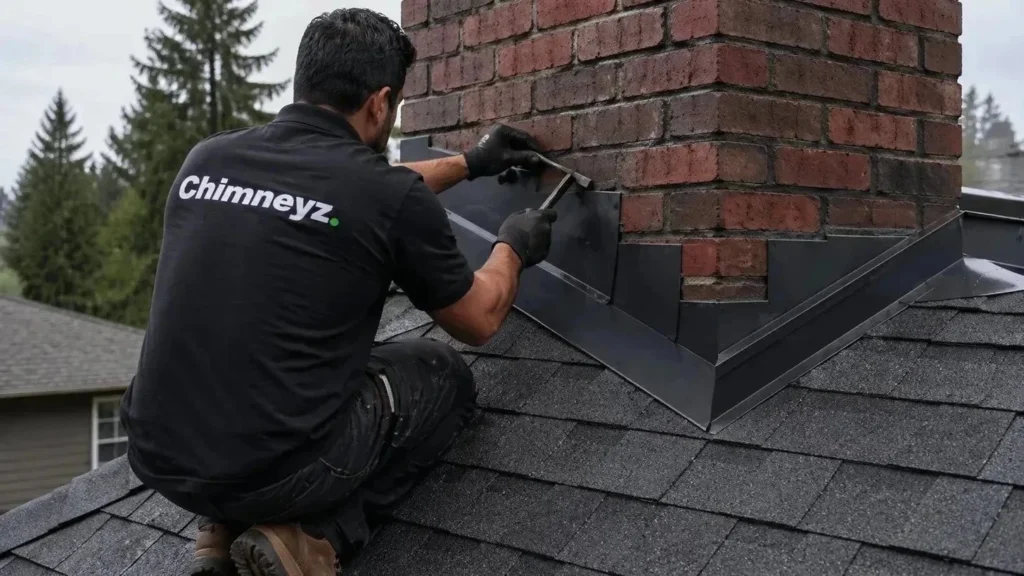
What this stock needs is unglamorous and specific. Mortar matched to the original in strength and, where it is visible, in colour and joint profile. Joints raked back to a proper depth rather than skimmed. Crowns rebuilt with a genuine overhang and drip so water is thrown clear of the brick rather than running down the face of it. Counter flashing cut into the masonry. On a stack that has stood since the 1890s the goal is another few decades of service, not a chimney that looks new for two.
Our Services in Snohomish, WA
From the roofline to the hearth, we provide integrated masonry, roofing, and restoration services. We don’t just fix symptoms, we solve the full problem with one accountable team.



READY TO SOLVE THE FULL PROBLEM?
From the roofline to the foundation, we handle the complex repairs other contractors miss. Don’t settle for temporary fixes. Contact us now to book your expert inspection and see how our all-in-one restoration approach can save you time and money.

READY TO SOLVE THE FULL PROBLEM?
Tell us about your project and we’ll get back to you within the hour.
The town sits low. Snohomish is built on river flats where the Pilchuck joins the Snohomish, and the water table is close enough to the surface that masonry at the base of a building can draw moisture upward through capillary action rather than only taking it from the sky. That is why the white efflorescent bloom on a chimney here often appears low rather than high, and why cleaning it off achieves nothing: the deposit is a symptom of water moving through the wall in volume.
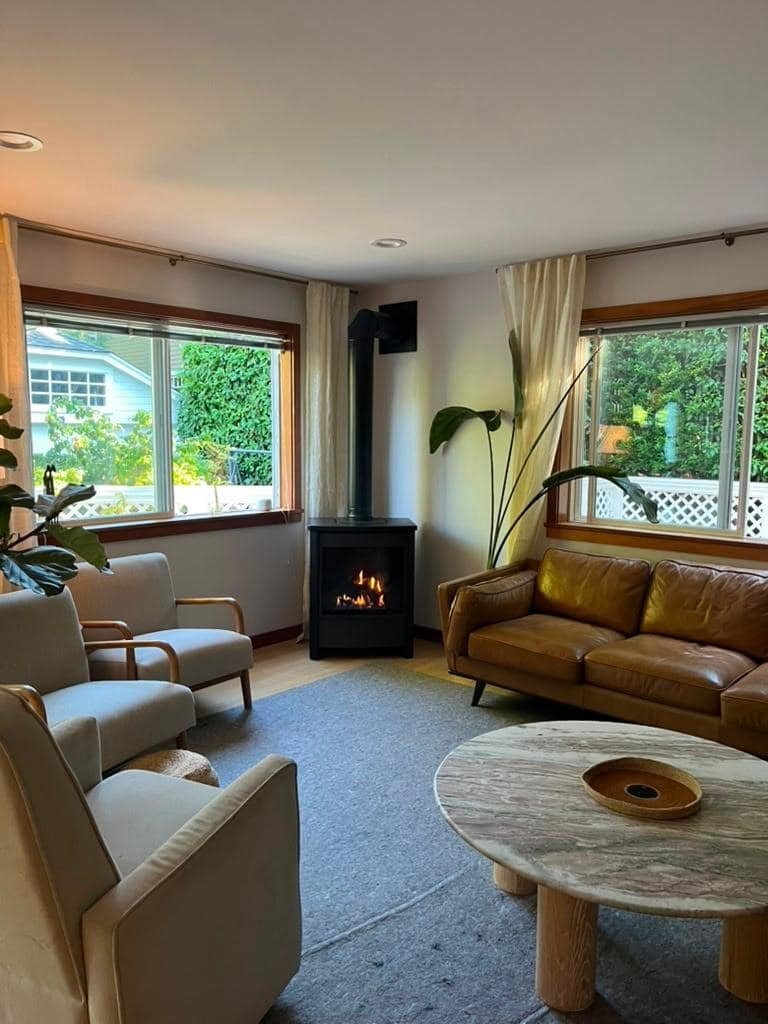
The other thing we find constantly in houses of this age is a flue that was never lined, or was lined once for a different appliance. A chimney built for a coal or wood stove in 1895 was not built for a modern gas insert, and the question of what is actually inside the stack is one nobody can answer from the ground. On older Snohomish houses that is the first thing worth establishing, before any money is spent on the outside of it.
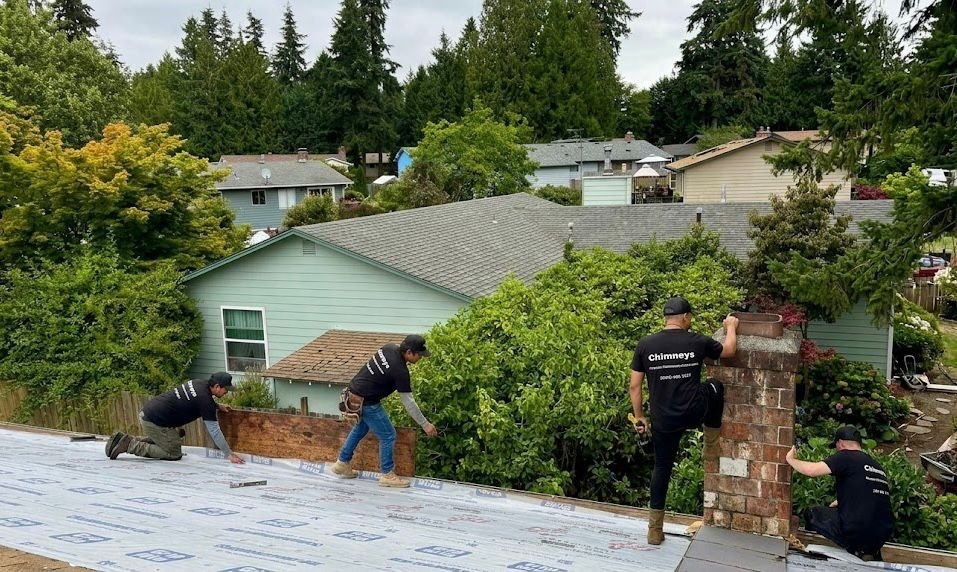
We survey the roofline by drone before quoting, which on a tall Victorian stack is often the only way to see the crown at all. Thermal imaging locates moisture inside the structure before it reaches plaster that may itself be original and worth keeping. Mortar grinding is extracted at the tool with HEPA equipment – on close-set historic streets that is simply necessary. And where a long-running leak has softened framing around a stack, we put the timber right before closing anything up.
about the area
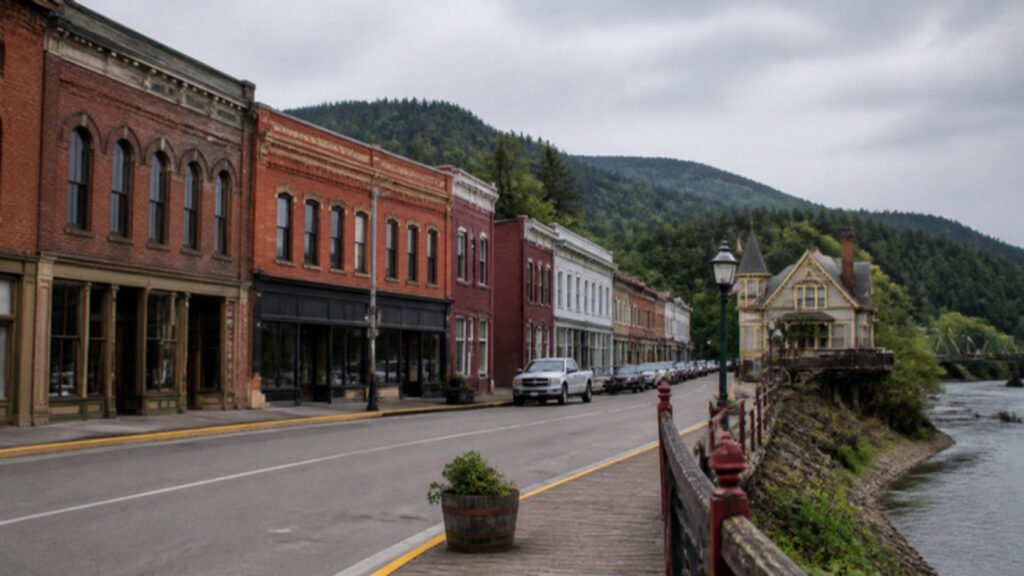
Snohomish sits where the Pilchuck River meets the Snohomish, on the river flats between Everett and Monroe. It was the county seat before Everett took the title, and its early prosperity is still standing: the Snohomish Historic District was listed on the National Register in 1974, with periods of significance running from 1875 to 1924. The result is a town centre of nineteenth-century commercial brick and residential streets of Queen Anne and craftsman houses, many still on their original foundations and still venting through their original stacks. Newer development has spread onto the surrounding hills, but the core of Snohomish is a working Victorian town rather than a preserved one, and the buildings are lived in rather than exhibited.
FAQ
Have questions about chimney leaks, masonry damage, roofing issues, or how our process works? Here are some of the questions homeowners ask us most often.
Our Snohomish chimney was repointed and now the bricks are flaking. Why?
Does the historic district impose rules on what we can do to a chimney?
Why is the white staining low on our chimney rather than up at the top?
Can we run a gas insert into our original Victorian chimney?
Is it worth saving a Victorian chimney or should it come down?
Is my leak from the chimney or the roof?
In many cases, it can be difficult to tell without a full inspection. Water often enters through cracked masonry, failing chimney crowns, damaged flashing, or weak points where the chimney meets the roof. That is why we inspect the full system before recommending a repair.
Do you only work on chimneys?
No. Chimneyz specializes in the connection between chimney, roof, masonry, and restoration. We handle chimney-related structural issues as a complete system, which helps homeowners avoid the confusion of hiring multiple contractors for one connected problem.
What are the signs of chimney or roofline damage?
Common signs include water stains on ceilings or walls, damp odors, visible cracks in brick or mortar, deteriorated flashing, loose materials, and signs of moisture around the fireplace or chimney structure.
Do you offer inspections before starting repairs?
Yes. Every project starts with a careful inspection so we can understand the real cause of the issue, assess the condition of the connected systems, and define the right scope of work.
Will I receive a clear estimate before work begins?
Yes. We believe in transparency and clear scopes. Once we identify the issue, we provide a detailed explanation of what needs to be repaired and how we recommend moving forward.
What types of repairs do you handle?
We handle chimney leak detection, masonry repair, brick repointing, flashing and roofline repair, structural restoration, and related chimney and roofing work designed to solve connected problems properly.
Do you serve areas outside Seattle?
Yes. Chimneyz serves Seattle and surrounding communities. You can visit our Service Areas section to see whether we work in your location and explore area-specific services.
Why work with one contractor for the entire system?
Because chimney problems often affect more than one part of the home. Working with one accountable team helps prevent miscommunication, finger-pointing, incomplete repairs, and repeated failures caused by fragmented work.
Still have questions? Contact our team for a clear assessment and expert guidance.
SERVICE AREA
98290 98296
Serving the greater Seattle area and Puget Sound. Explore chimney, roofing and masonry service in the communities next door.
 CALL NOW