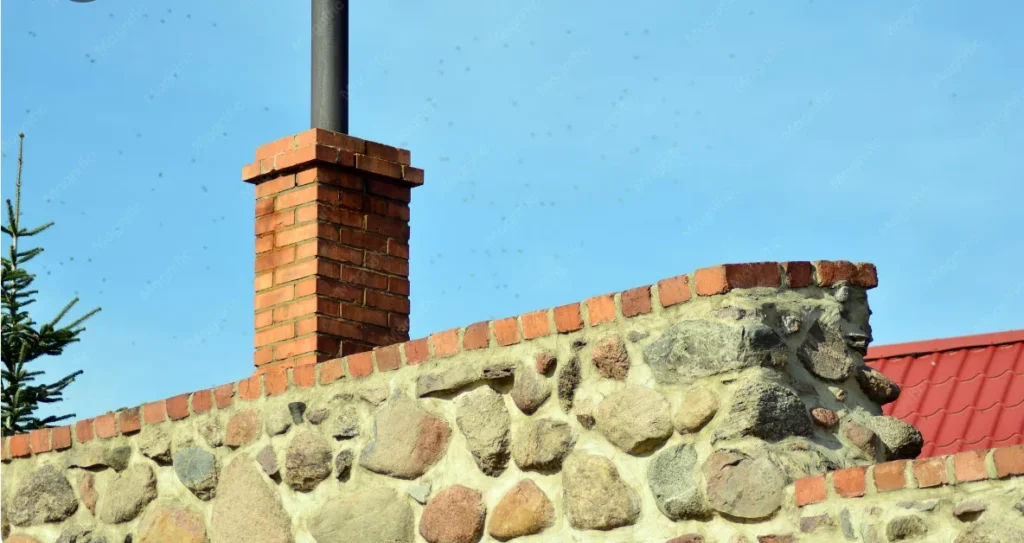
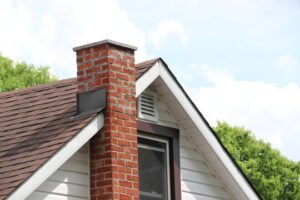
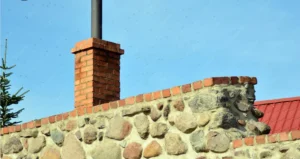
A beautiful brick fireplace is often the visual centerpiece of a home, evoking warmth and comfort. However, the architectural structure rising above that fireplace presents a major point of vulnerability on your roof line. Chimneys act like large structural funnels sticking straight out into the open sky. When their protective barriers wear thin, they easily divert gallons of rushing water directly into your living spaces.
Because a chimney structural failure begins high above your living areas, it often goes completely unnoticed during the first stages of moisture penetration. By the time a visible watermark reveals itself in your living room, home office, or bedroom, the underlying water intrusion has likely been active for weeks. Interior sheetrock possesses very little defense against continuous water exposure, and ignoring the early signs of a leak guarantees rapid, costly damage to your home’s interior finishes.
The Fast-Moving Anatomy of Drywall Degradation
Interior sheetrock, commonly called drywall, is a highly engineered panel made from pressed gypsum plaster sandwiched between heavy layers of structural paper faces. While gypsum is an excellent material for creating smooth indoor walls, it is incredibly hydrophilic, meaning it absorbs water like a dense sponge.
When a chimney leak bypasses your roof flashing or penetrates cracked exterior masonry, gravity pulls the moisture straight down the vertical outer walls of the flue structure. The water pools on top of horizontal ceiling joists before dripping directly onto the rear face of your ceiling drywall panels. Because the water enters from the hidden, unpainted back side of the sheetrock, the damage progresses substantially before you can see it from the floor below.
As the gypsum core drinks in the moisture, it undergoes structural softening. Within a few days of steady exposure, the core loses its density and begins to separate from its paper backing. This triggers sagging, bubbling paint, and unsightly brown water rings. If left unchecked, the heavy, water-logged plaster panels completely lose their structural capacity, causing sections of the ceiling to break apart and collapse without warning.
Three Common Chimney Failure Points that Flood Walls
Water can breach your chimney system through multiple vulnerabilities. Identifying these entry points early helps prevent catastrophic interior sheetrock damage:
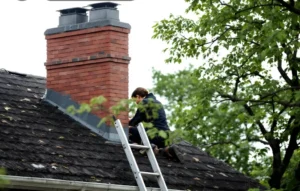
- Failed Flashing Systems: Flashing consists of metal strips wrapped around the base of the chimney where it cuts through the roof deck. When these thin metal layers rust out or lose their waterproof tar seals, rainwater rushes directly into the attic framing.
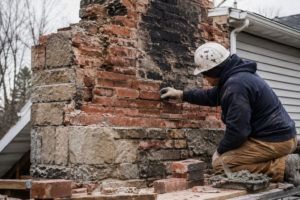
- Cracked Mortar and Spalled Bricks: Porous brickwork absorbs water during storms. If the external mortar joints are cracked, water seeps through the masonry core and travels down the interior framing, bypassing the roof line entirely.
- Damaged Chimney Crowns: The concrete pad sealing the top of the chimney structure can crack over time. This allows rainwater to pour straight down into the middle of the brick walls, rotting out internal structures.
According to residential care data tracked by the Housing and Urban Development department, unresolved structural envelope breaches, including chimney transitions, remain a primary driver of preventable, high-cost indoor structural deterioration nationwide.
The Hidden Threat of Secondary Structural Damage
The visible ruin of your interior paint and sheetrock is only the surface level of the crisis. When water continuously migrates down a chimney flue, it saturates the wooden wall studs and plywood roof sheathing surrounding the hearth. Over time, this constant dampness leads to wood rot, weakening the essential framing holding up your ceilings.
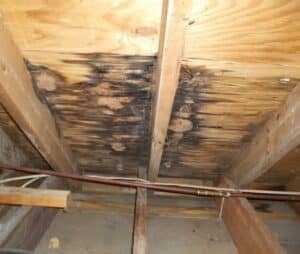
Furthermore, dark, damp spaces behind wet drywall create the perfect habitat for active mold spore colonization. Mold colonies thrive on the organic paper backing of sheetrock when it remains damp for more than 48 hours. These hidden mold colonies release airborne spores into your ventilation systems, causing persistent musty odors and triggering respiratory issues for sensitive family members.
Resolving a advanced leak requires more than simply patching a small square of wallboard. It demands professional mold remediation, framing stabilization, and a full replacement of the ruined insulation materials inside the wall cavity. Research published by the Centers for Disease Control and Prevention underscores that keeping indoor moisture levels low and fixing structural leaks immediately is critical to preventing toxic biological growth inside residential properties.
Prevent Drywall Disaster with Chimneyz LLC
Catching a chimney breach early is the absolute best way to save thousands of dollars in interior drywall replacement and structural framing repairs. At Chimneyz LLC, our highly trained technicians excel at tracking down hidden moisture paths and correcting them at the source. From custom metal flashing replacements to advanced masonry waterproofing and structural tuckpointing, we build an impenetrable barrier that keeps seasonal weather out of your attic and living spaces. Do not wait for a small ceiling stain to turn into a major room collapse. Contact our expert team today to schedule your comprehensive chimney inspection and protect your home’s beautiful interior spaces.