Warning sign
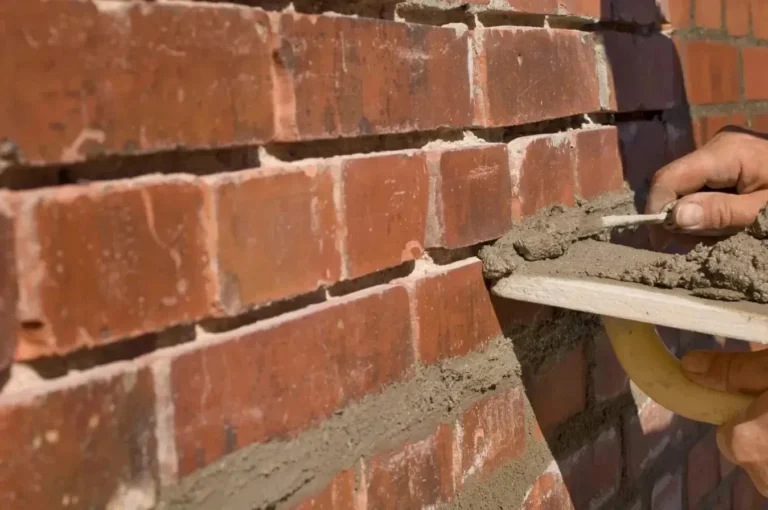
WatchSpalling is what masons call a brick losing its face — the hard outer skin pops off and leaves the soft, porous body of the brick exposed. Once that happens the brick stops being weatherproof and starts behaving like a sponge. It is rarely one brick on its own, and the pattern of which bricks have gone usually tells you where the water is coming from.


The sign
A brick is not uniform material. It is fired hardest at the surface, and that outer skin is the part that sheds water. Spalling is that skin coming off, usually in thin shells or flakes rather than the brick crumbling evenly, and what it leaves behind is the soft, open body of the brick facing the weather. From that point the brick absorbs several times more water than it did, which is why spalling spreads outward from wherever it started.
Where it has gone matters as much as how much has gone. A band of damaged brick below the crown points at the crown. Damage concentrated on one elevation points at wind-driven rain or a gutter. Damage at the roofline points at the flashing. Reading that pattern is the first thing we do, because replacing brick without closing the route the water took just buys a few seasons.
What to look for
The cause
Masonry absorbs water through open joints and damaged faces. When the temperature drops below freezing, that water expands and pushes the face of the brick off from the inside. Puget Sound does not freeze hard for long, but it does cross freezing repeatedly through the winter — and repeated shallow freeze-thaw on masonry that is already saturated does more damage than one hard freeze on masonry that is dry.
Mortar is designed to be the sacrificial part of a wall: softer than the brick, so it wears first and can be replaced. Once it has eroded past the brick face, water runs into the joint instead of over it, and the brick starts taking the damage that the mortar was supposed to take.
A repair done with modern high-cement mortar on an older soft brick traps moisture and forces it out through the brick instead of the joint. The same happens when masonry is coated with a film-forming sealer or paint. Both speed spalling up rather than slow it down, which is why the material has to match the wall.
Priority
This is a watch-and-act sign rather than an emergency. A handful of spalled bricks is a contained repair. The reason not to leave it is that spalling is self-feeding: each brick that loses its face lets more water into the wall, which damages the bricks around it. The repair stays small for a season or two and then stops being small. If the spalling is at the top courses, or bricks have moved rather than just flaked, have it looked at sooner.
Check it yourself
Six questions, no contact details, nothing sent anywhere. It tells you what the repair most likely involves and how soon it wants doing.
The repair
The wall is read first: which bricks have gone, where on the chimney, and what that says about where water is entering.
Damaged brick is cut out and replaced with brick matched for size, colour and hardness, rather than whatever is on the shelf.
Open or eroded joints are repointed with mortar matched to the original, so the joint stays the softer part of the wall.
The source gets fixed in the same visit where it is above the damage — crown, cap or flashing — because new brick under an old leak spalls again.
The services this involves
If you wait
Spalling does not plateau. The exposed body of a brick absorbs several times more water than its face did, so every brick that goes makes the wall wetter and the next freeze more damaging. Left long enough on a chimney, the top courses lose enough material to become unstable, and a repair that was a dozen bricks and some repointing turns into rebuilding the stack from the roofline up.
Right now
A handful of faces gone. Cut out, replace, repoint, and close whatever is letting water in above it.
Through the next wet season
Each exposed brick body absorbs several times what its face did, so every cold spell takes more faces and the damage spreads outward from where it started.
A few years on
Enough material is missing from the top courses that the stack is no longer sound, and the repair becomes a rebuild from the roofline up.
Questions
A brick that has lost its face cannot be restored — the hard skin is the part that made it weatherproof and it is gone. Face-sealing it traps water behind the coating and usually makes it worse. The damaged units get cut out and replaced; the sound ones around them get repointed.
They are two stages of the same process. Mortar is meant to erode first, which is why repointing is routine maintenance. Once the brick itself is flaking, the mortar has usually been gone long enough for water to start working on the brick, so both get addressed together.
It should match on size, hardness and absorption, and come as close as it reasonably can on colour and texture. Hardness matters most: a replacement brick that is denser than its neighbours pushes the damage onto them instead of sharing it.
Paint on masonry is a film. It stops the wall breathing outwards but does not stop water getting in from the top or through the joints, so moisture collects behind the coating and blows the brick face off. Painted chimneys often spall faster than bare ones.
Keep looking
Dark staining, mold or soft, rotting framing means water is already getting in — usually from failed flashing or a cracked crown above.
Read the signWatchThat powdery white film is salt left behind as water passes through the brick — a clear sign moisture is moving through the masonry.
Read the signUrgentThe concrete cap that sheds rain has split. Water now runs straight into the flue and the masonry below every time it rains.
Read the signUrgentThe metal seal where the chimney meets the roof is the #1 place water gets in. Rust, gaps or lifting edges mean it is time to reseal.
Read the signUrgentA chimney pulling away from the house, or one shedding brick and mortar, points to structural failure that only gets worse and costlier.
Read the signNext step
We will tell you what it is and what it needs, including when the answer is that it can wait. Serving Seattle and the surrounding Puget Sound area.
 CALL NOW