Warning sign
UrgentThis is the one sign on the list that is not a warning about the future. A stain on the ceiling, a musty smell in the firebox or framing that gives under a screwdriver means water has already found a path in and has been taking it for a while. The chimney is almost never where the damage shows — water travels down rafters and along framing before it reaches drywall, so by the time you can see it, the leak is usually a floor or two above.


The sign
The thing to understand about a chimney leak is that the damage shows up a long way from where the water gets in. Water entering at the flashing or through a cracked crown runs down the outside of the flue, along rafters and across the top of a ceiling before it finds a seam, a fixing or a light fitting to come through. That is why the stain is often nowhere near the chimney breast, and why chasing the stain instead of the entry point is the most common way this repair gets done twice.
It also means the stain is late news. By the time drywall discolours, the framing above it has usually been damp through several wet spells. The signs below are the ones that show up earlier and in more than one place at once, which is what separates a chimney leak from a one-off spill or a plumbing problem.
What to look for
The cause
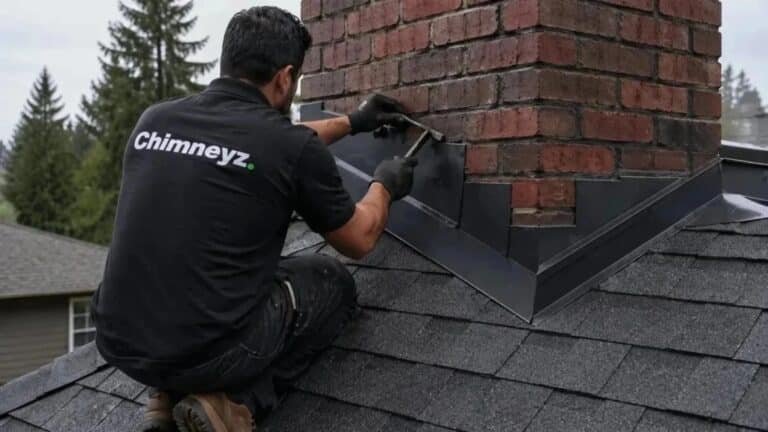
The join between a chimney and a roof is the single most common entry point for water on a house, because it is the one place two different materials have to be sealed to each other. When the metal lifts, the sealant dries out or a previous repair was done with roofing tar instead of properly stepped metal, rain runs straight behind it and into the roof deck.
The crown is the sloped concrete cap on top. Once it splits, water goes down inside the brickwork rather than off the edge, soaking the chimney from the inside out and emerging wherever it finds a gap.
Brick and mortar that have lost their face or their pointing hold water instead of shedding it. In a climate with a long wet season the masonry never gets a chance to dry out between storms, so the moisture keeps moving inward.
Priority
Treat this as urgent. Water that is already inside is doing three things at once: rotting structural timber, feeding mold in a cavity you cannot ventilate, and soaking masonry that will spall the first time the temperature drops. None of those stop on their own, and each one makes the eventual repair bigger. The repair while it is still a flashing or crown job is a fraction of the work it becomes once rafters and sheathing have to come out.
Check it yourself
Six questions, no contact details, nothing sent anywhere. It tells you what the repair most likely involves and how soon it wants doing.
The repair
We start at the roof, not at the stain. The point of entry is found first — flashing, crown, cap, mortar joints or the masonry face — because sealing the wrong thing just moves the leak.
The entry point is repaired properly: stepped and counter-flashed metal where the chimney meets the roof, a rebuilt or recast crown, repointing where joints have opened.
Saturated or damaged masonry is repaired or rebuilt rather than painted over, so the wall can dry and stay dry.
Where water has reached framing or drywall, the damaged material is dealt with as part of the same job — we handle the water damage side, not just the chimney.
The services this involves
If you wait
A chimney leak does not stay a chimney problem. The same water that marks a ceiling is sitting in the roof deck and the framing around it. Timber that stays wet loses strength and eventually has to be cut out and replaced; mold establishes itself in the cavity; and the masonry, now full of water, starts to break apart from the inside the first cold snap after it saturates. A leak caught at the flashing is a day on the roof. The same leak two winters later is roof deck, framing, plaster and often the top section of the chimney as well.
Right now
A stain, a smell, maybe a soft spot. The repair is still the flashing or the crown that let the water in.
Through the next wet season
The sheathing and the rafter ends beside the chimney stay wet between storms, mold establishes in a cavity that cannot dry, and the masonry saturates.
A few years on
Framing and decking have to be cut out and replaced, the finishes below them with it, and the top of the chimney usually comes down as part of the same job.
Questions
Yes. A cap keeps rain out of the flue opening, which is only one of the ways water gets in. Most chimney leaks come through the flashing where the chimney meets the roof, through a cracked crown, or straight through masonry that has lost its mortar or its brick face. A cap does nothing about any of those.
Wind-driven rain hits the chimney from the side rather than falling on it, which pushes water into gaps that shed it fine in normal rain. That is why a leak can look intermittent for a year or two before it becomes constant — the defect is there the whole time, the weather just has to arrive from the right direction.
We are not the people to give you a health opinion, and we will not pretend otherwise. What we can tell you is that mold on framing or drywall beside a chimney means that material has been wet repeatedly, and it will keep coming back until the water is stopped. Fixing the leak is what makes any remediation last.
Yes, and that is the honest answer. “Water near the chimney” covers everything from a lifted piece of flashing to a chimney that needs its top three feet rebuilt. We inspect, show you what we found, and quote the actual repair.
Keep looking
When brick faces flake and mortar turns to sand, your masonry’s first line of defense against water has failed and needs repair.
Read the signWatchThat powdery white film is salt left behind as water passes through the brick — a clear sign moisture is moving through the masonry.
Read the signUrgentThe concrete cap that sheds rain has split. Water now runs straight into the flue and the masonry below every time it rains.
Read the signUrgentThe metal seal where the chimney meets the roof is the #1 place water gets in. Rust, gaps or lifting edges mean it is time to reseal.
Read the signUrgentA chimney pulling away from the house, or one shedding brick and mortar, points to structural failure that only gets worse and costlier.
Read the signNext step
We will tell you what it is and what it needs, including when the answer is that it can wait. Serving Seattle and the surrounding Puget Sound area.
 CALL NOW