Warning sign
WatchEfflorescence is the white, chalky bloom that appears on brick, block or stone. The deposit itself is harmless — it is mineral salt, and it brushes off. What matters is what it proves. Salt only reaches the surface if water carried it there, which means water is moving through the wall rather than running off it. Efflorescence is the wall showing you its plumbing.



The sign
Efflorescence is not a stain sitting on the brick. It is salt that was dissolved inside the wall, carried to the surface by water, and left behind when that water evaporated. The deposit is harmless and it brushes off. What cannot be brushed off is the fact that it proves a route: salt does not move through masonry on its own, so if it reached the face, water reached the face, and it came from somewhere above or behind.
That makes it the most useful sign on this list, because it appears early. It usually shows up while the problem is still a crown, a cap or some open joints, well before the brick faces start to pop or anything stains a ceiling inside. The pattern of where it blooms maps the path the water is taking down through the stack, which is why we photograph it before anybody cleans it off.
What to look for
The cause
On a chimney the most common path starts at the top: a cracked crown, a missing cap or open joints let rain into the masonry, and it works its way down through the stack, picking up salts as it goes.
Eroded mortar joints, spalled brick faces and old repairs made with the wrong material all let water into the body of the wall. Through a long wet season that masonry never fully dries, so the movement is more or less continuous.
A newly built or repointed wall often blooms for its first season as the free salts in fresh mortar wash out, and then stops. Efflorescence that keeps returning year after year on an established wall is not curing — it is a leak.
Priority
On its own this is a watch sign, not an emergency. The deposit does no damage. The reason to act is that it is an early and very reliable indicator: it shows up while the problem is still a crown, a cap or some repointing, usually well before the brick starts spalling or a stain appears on a ceiling inside. Dealing with it at the efflorescence stage is the cheapest this repair is ever going to be.
Check it yourself
Six questions, no contact details, nothing sent anywhere. It tells you what the repair most likely involves and how soon it wants doing.
The repair
The bloom is traced to its path, not just cleaned — where it is on the wall tells us where the water is getting in and where it is running.
The entry point above the staining is repaired: crown, cap, flashing or open joints, depending on what the inspection finds.
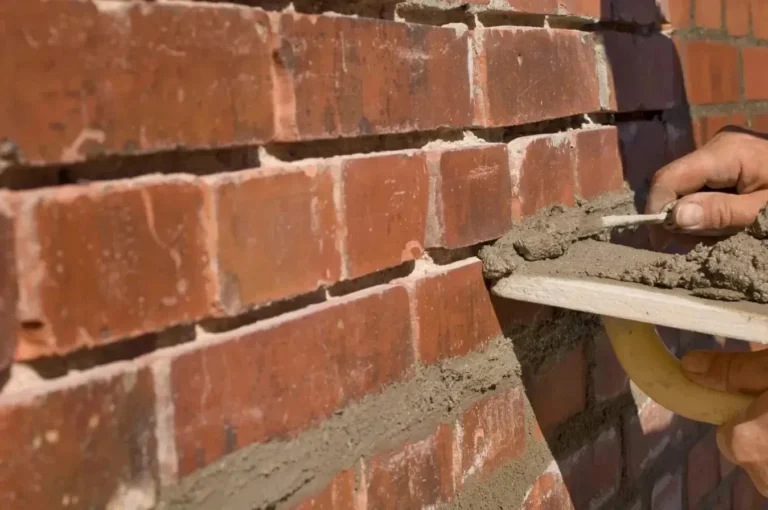
Failed pointing and damaged brick along the path are made good, so the wall sheds water instead of absorbing it.
The deposit itself is cleaned down at the end, once the moisture has been stopped. Cleaning first just hides the only evidence you had.
The services this involves
If you wait
Nothing happens quickly here, which is exactly why it gets ignored. But the water that is depositing salt on the outside is saturating the wall on the inside. Over a few seasons the same moisture erodes the pointing it is passing through, pops brick faces when the temperature drops, and eventually finds its way to framing or plaster. The white bloom is the cheap warning that arrives before the expensive ones.
Right now
Nothing but a white bloom on the brick. What it is pointing at is usually a crown, a cap or some open joints.
Through the next wet season
The water leaving that salt behind keeps eroding the joints it passes through, and the first cold spell after it saturates starts popping brick faces.
A few years on
Spalled masonry, a stain on a ceiling inside, and a repair that now has to include everything the water reached on the way down.
Questions
No. Efflorescence is mineral salt and is usually white, crystalline and dry; it brushes off and often reappears. Mold is biological, tends to be green, grey or black, and grows on damp organic material rather than on brick. They can appear on the same wall, because both need water.
You can remove the deposit, but pressure washing masonry that is already absorbing water drives more water into it and can strip what is left of the mortar joints. If the wall is cleaned at all it should be after the leak is fixed, and gently.
Probably not. Fresh mortar contains soluble salts, and a new or newly repointed section commonly blooms through its first wet season and then stops. If it is still returning the season after that, it is worth a look.
A breathable masonry treatment can reduce absorption on a sound wall, and we do use them in that role. A film-forming sealer applied over a wall that is already leaking traps the moisture and pushes the damage into the brick. Sealing is the last step after the repair, never a substitute for it.
Keep looking
Dark staining, mold or soft, rotting framing means water is already getting in — usually from failed flashing or a cracked crown above.
Read the signWatchWhen brick faces flake and mortar turns to sand, your masonry’s first line of defense against water has failed and needs repair.
Read the signUrgentThe concrete cap that sheds rain has split. Water now runs straight into the flue and the masonry below every time it rains.
Read the signUrgentThe metal seal where the chimney meets the roof is the #1 place water gets in. Rust, gaps or lifting edges mean it is time to reseal.
Read the signUrgentA chimney pulling away from the house, or one shedding brick and mortar, points to structural failure that only gets worse and costlier.
Read the signNext step
We will tell you what it is and what it needs, including when the answer is that it can wait. Serving Seattle and the surrounding Puget Sound area.
 CALL NOW