Warning sign
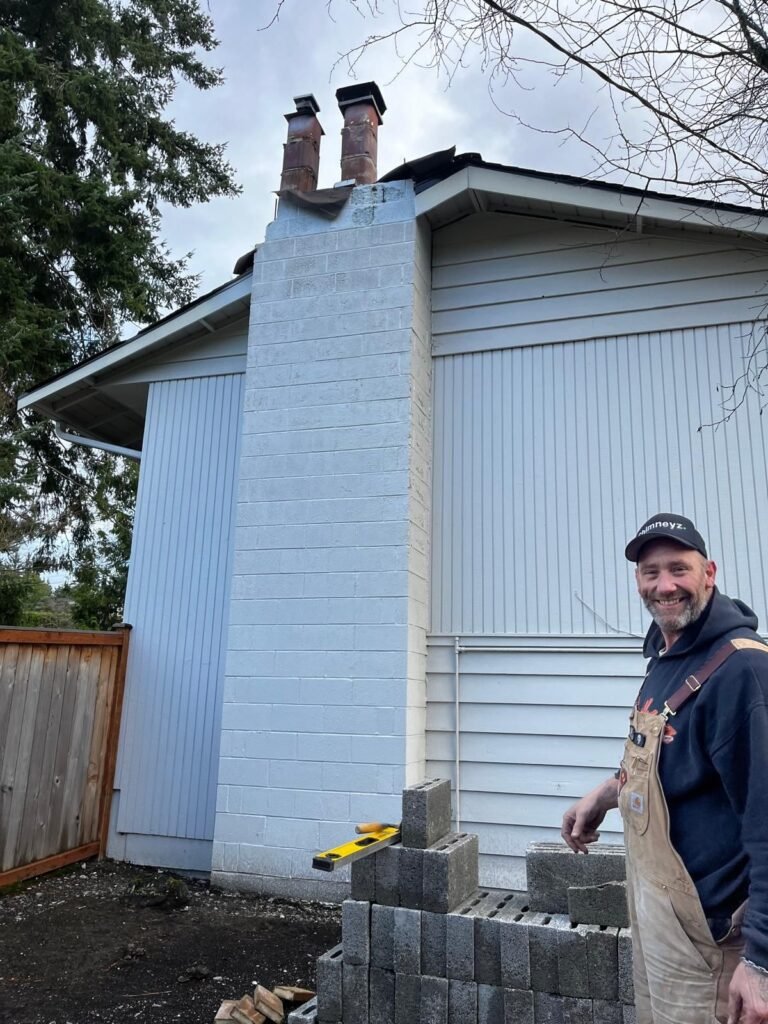
UrgentEvery other sign on this list is about keeping water out. This one is about whether the structure is still doing its job. A chimney is a tall, heavy, narrow column of masonry with very little holding it sideways, and it is supported either by its own footing or by the house. When it starts to lean, separate or shed material, something underneath it or inside it has already failed.


The sign
A chimney is an unusual piece of structure: tall, narrow, very heavy, and braced sideways by almost nothing. It stands up because the masonry is continuous and because whatever is under it is not moving. When a stack starts to lean, separate from the wall or shed material in quantity, one of those two things has already stopped being true, and neither of them reverses on its own.
The useful distinction is between a stack that has tilted as a unit and one that is coming apart where it stands. A uniform lean with a gap that widens toward the top usually points at the footing or the ground under it. Stepped cracking, open joints and bulging in the middle of the stack point at the masonry itself. The signs below are worth measuring rather than eyeballing, because brickwork and rooflines fool people constantly in both directions.
What to look for
The cause
Chimneys are heavy and are often built on a footing poured separately from the house foundation. If the ground under it settles, washes out or heaves, the chimney tilts as a unit — which is why the gap at the top is usually the first thing anybody notices.
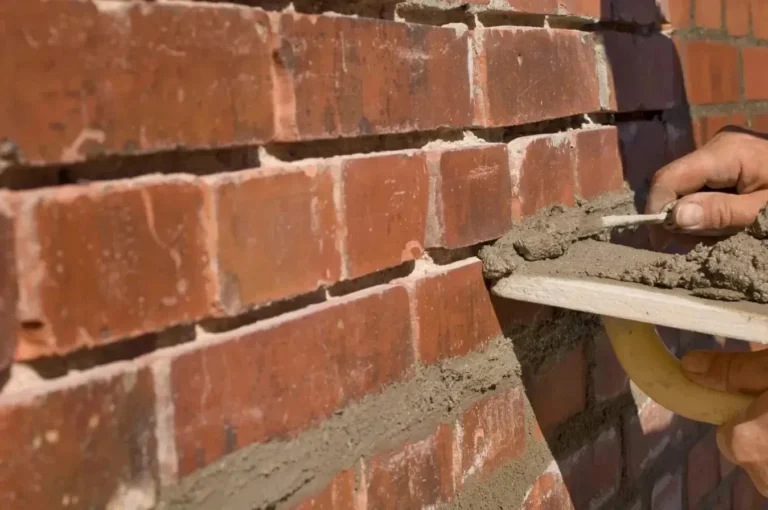
A masonry stack holds together because the joints do. Once the mortar has eroded through enough of the stack, the brickwork loses its ability to resist sideways load, and the column starts to deform under its own weight and in the wind.
This is where the other five signs end up. Years of water entering through a cracked crown or failed flashing saturate the stack, break down the joints internally and spall the brick, until what is left is no longer structurally continuous.
Priority
Urgent, and the only sign on this list where we would ask you to keep people away from the base of it until it has been looked at. A leaning chimney is not a cosmetic problem and it does not stabilise on its own. It also stops being repairable at some point: a stack that can be taken down and rebuilt today may have to come down as an emergency later, and anything it falls on comes with it.
Check it yourself
Six questions, no contact details, nothing sent anywhere. It tells you what the repair most likely involves and how soon it wants doing.
The repair
The first question is why it moved — footing, mortar, or water from above. A chimney rebuilt on a footing that is still moving leans again.
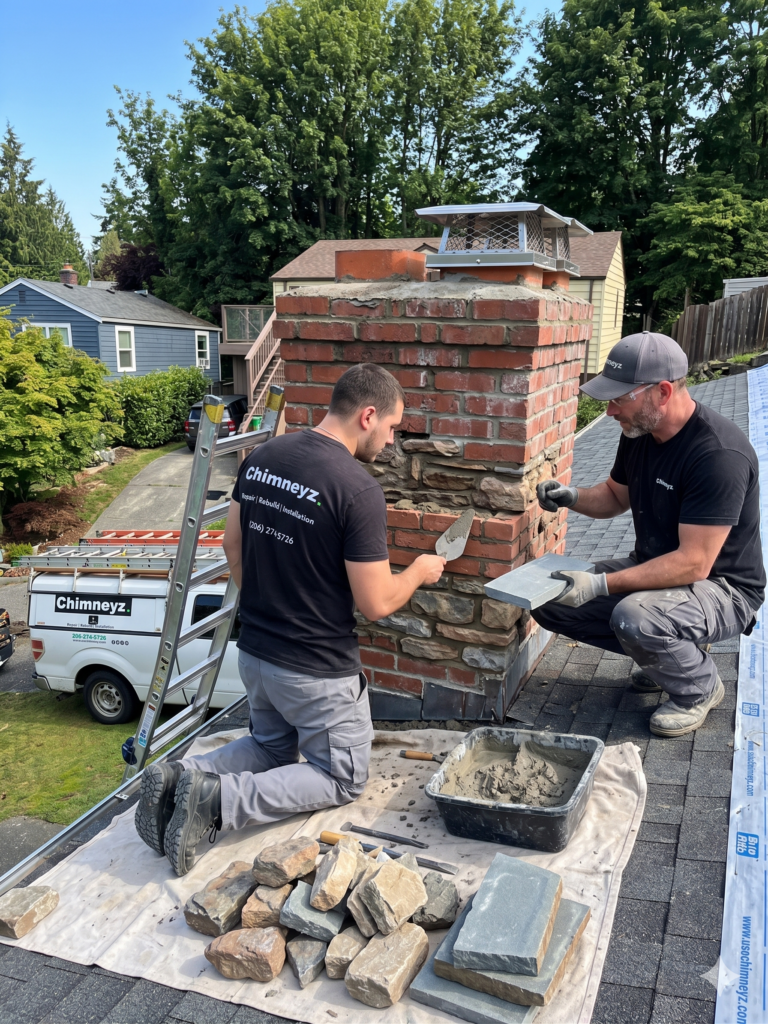
Where the masonry has failed but the base is sound, the stack is rebuilt from a solid course upward, using matched brick and properly specified mortar.
Where the footing or the ground is the cause, that gets addressed first; foundation and waterproofing work is in-house, so it is not handed to a second contractor.
Crown, cap and flashing are rebuilt as part of the job, because the water route that damaged it is still there until somebody closes it.
The services this involves
If you wait
There is no version of this that gets better. The lean grows because the cause is still acting, and the stack gets weaker as more joints open. The practical cost is that the options narrow: early on it may be a partial rebuild from the roofline, or a footing repair and repointing. Left long enough it becomes a full demolition and rebuild, with the roof, the ceiling below and whatever the chimney took with it to put right as well.
Right now
A gap you can measure. Depending on the cause it may still be a footing repair and repointing rather than a rebuild.
Through the next wet season
Whatever moved it is still moving it. The lean grows, more joints open, and the stack carries less of its own weight than it did.
A few years on
Full demolition and rebuild, with the roof, the ceiling below and anything the chimney came down onto to put right as well.
Questions
Measure rather than judge by eye — brickwork and rooflines fool people constantly. Check the gap between the chimney and the wall at the bottom and at the top, and look at whether it is parallel. A gap that widens as it rises, or one that has changed since you last checked, is the thing to act on.
It can be. A masonry stack is heavy and it is above a roof, a driveway or a garden. We are not going to tell you over a web page how close yours is to failing, which is precisely why it needs eyes on it rather than a guess.
Not in the way people hope. Masonry is not re-plumbed in place. Depending on the cause, the answer is usually stabilising or repairing what is underneath it and rebuilding the stack, in whole or from a sound course upward.
If the chimney is no longer in use that is a legitimate option, and sometimes the sensible one. It still has to be done properly — taken down to a sound point, the structure made good and the roof closed up so the hole where it was does not become the next leak.
Keep looking
Dark staining, mold or soft, rotting framing means water is already getting in — usually from failed flashing or a cracked crown above.
Read the signWatchWhen brick faces flake and mortar turns to sand, your masonry’s first line of defense against water has failed and needs repair.
Read the signWatchThat powdery white film is salt left behind as water passes through the brick — a clear sign moisture is moving through the masonry.
Read the signUrgentThe concrete cap that sheds rain has split. Water now runs straight into the flue and the masonry below every time it rains.
Read the signUrgentThe metal seal where the chimney meets the roof is the #1 place water gets in. Rust, gaps or lifting edges mean it is time to reseal.
Read the signNext step
We will tell you what it is and what it needs, including when the answer is that it can wait. Serving Seattle and the surrounding Puget Sound area.
 CALL NOW