4 min read
Is fiber cement or vinyl siding better for a wet climate?
Fiber cement handles sustained wet weather better. It is dimensionally stable, does not soften, and will not warp in heat, but it is heavier, costs more to install and needs its cut edges sealed and its paint maintained. Vinyl is cheaper, needs no painting and does not rot, but it moves a lot with temperature and hides problems behind it. Both work here; the installation detail decides which performs.
Choosing siding in western Washington is not the same decision as choosing it in a dry climate. Here the cladding spends months at a time wet, and the question is less about appearance than about how each material behaves when it never fully dries.
Fiber cement and vinyl are the two realistic choices for most homes in the region. They fail in different ways, which is the useful thing to understand before deciding.
Both materials, incidentally, are only as good as the gap behind them. A drainage plane that lets water that gets past the cladding run down and back out is what keeps a wall dry in this climate, and it is invisible once the job is finished. It is also the first thing cut when a quote is being sharpened, which is why the cheapest bid frequently becomes the most expensive wall.
How Each One Handles Water
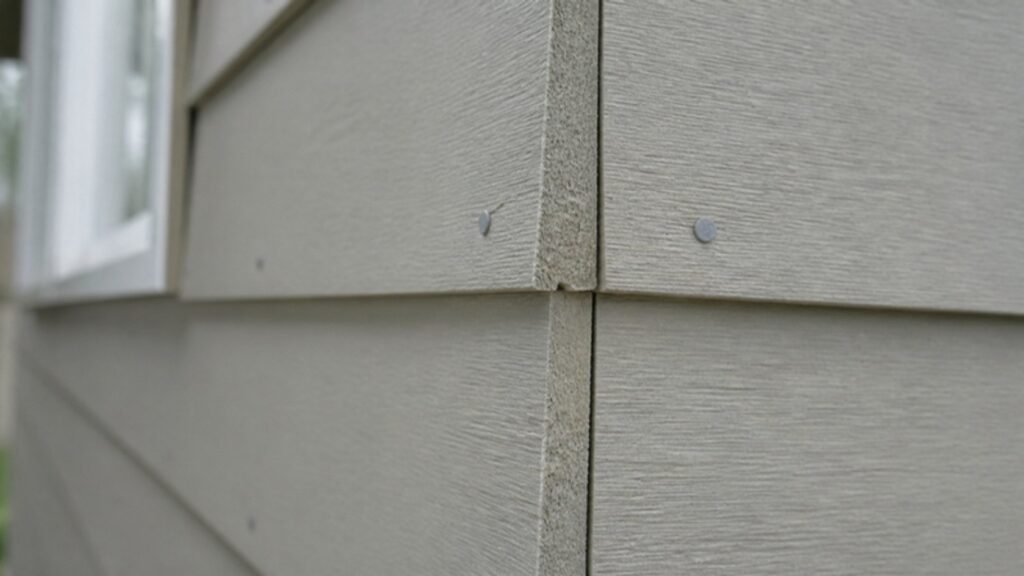
Fiber cement is a composite of cement, sand and cellulose fibre. It does not rot and it does not soften when wet, which is why it has become the regional default. Its weak point is the cut edge: a board cut on site and installed without sealing that edge will wick moisture into the core, and the damage starts there rather than on the face.
Vinyl does not absorb water at all, which sounds like the better answer. The catch is that vinyl is a rainscreen, not a seal. Water gets behind it by design and is meant to drain back out. If the weather-resistive barrier and the flashing behind it were done poorly, vinyl will hide the consequences for years while wood rot develops out of sight.
Fire behaviour separates them as well. Fiber cement is non-combustible and holds up to radiant heat; vinyl softens and deforms at comparatively low temperatures. That is mostly a question of risk tolerance, but it becomes a practical one on walls close to a property line, near an outdoor fire feature, or beside a barbecue area.
Movement, and Why It Matters Here
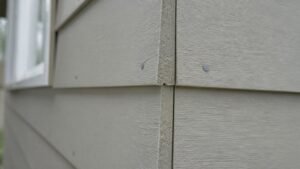
Vinyl expands and contracts significantly with temperature, which is why it is hung loose on its nails rather than fixed tight. Installed correctly that movement is invisible. Installed tight, the panels buckle in summer and pull at the fasteners in winter, and the joints that were supposed to shed water stop lining up.
Fiber cement barely moves. That stability is its main practical advantage in a climate with a wide seasonal swing, because the joints stay where they were put.
Repairability is the difference homeowners feel years later. A damaged fiber cement board can be cut out and replaced, and the new piece painted to match the wall. A damaged vinyl panel has to be unlocked from its neighbours, and matching the colour of a run that has had a decade of sun on it is often not possible, so repairs show.
What Each One Costs You Over Time
The honest comparison is not the install quote:
- Vinyl costs less up front and needs no painting, but a damaged panel is harder to match years later.
- Fiber cement costs more to install because it is heavy and slow to cut, and it needs repainting on a cycle.
- Both last decades when the water management behind them was built correctly, and neither does when it was not.
That last point is the one worth paying attention to. Most siding failures we open up are not material failures. They are failures of the flashing, the barrier and the drainage plane behind the cladding.
Weight has consequences during installation. Fiber cement is heavy enough to need a larger crew and solid fastening into structure, which also means that any underlying rot in the sheathing has to be dealt with before the new cladding goes on rather than after. On a wall with existing damage, that sequencing often decides the schedule.
Which One Suits Your House
Fiber cement tends to be the better fit for exposed elevations, homes with wide temperature swings, and anywhere the look of a painted board matters. Vinyl tends to suit sheltered walls and budgets where the money is better spent on the assembly behind the cladding than on the cladding itself.
Whichever you choose, the detailing decides the outcome. Fiber cement installation and vinyl installation are different trades with different rules, and a crew fluent in one is not automatically fluent in the other.
One practical note on quotes: ask what happens behind the cladding. A quote that specifies the weather-resistive barrier, the flashing at every opening, and the treatment of cut edges is a quote from someone who expects the wall to last. A quote that lists only the siding is a quote for the part you can see.
Talk It Through with Chimneyz LLC
There is no universally correct answer here, only the right answer for a particular house, elevation and budget. What is not optional is getting the water management behind the siding right.
Chimneyz LLC installs both across the Puget Sound region and will walk your walls with you before recommending either. Get in touch for an assessment.