4 min read
How can I tell if there is wood rot behind my siding?
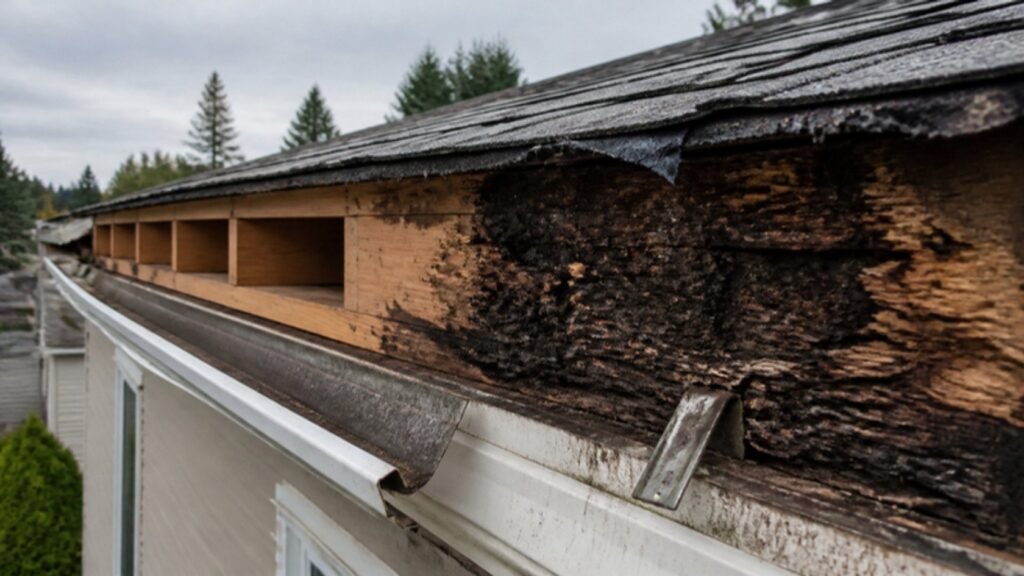
Look for siding that feels soft or springy under thumb pressure, boards that have started to cup or wave along their length, paint lifting in patches rather than flaking evenly, and dark staining that returns after washing. Any of these means moisture is sitting behind the cladding. By the time rot is visible at the surface the sheathing behind it has usually been wet for several seasons.
Siding has one job: keep water off the structure behind it. When it stops doing that job, the failure happens where you cannot see it, and it happens slowly.
In a climate that delivers persistent rain for half the year, the gap between “the siding started letting water through” and “the sheathing is soft” is measured in seasons, not years.
A long screwdriver makes the test more definite where you already suspect a problem. Press the tip into the suspect area with moderate pressure at a trim joint or a bottom edge. Sound wood resists; compromised wood takes the tip without much argument. Keep it to places where a small hole does not matter, and treat any easy penetration as a reason to open the wall rather than to patch it.
Press on It
The single most useful test takes no tools. Press firmly with your thumb on the siding, particularly low on the wall, below windows, and anywhere near a downspout or a hose bib.
Sound siding is rigid. If it gives, feels spongy, or your thumb leaves an impression, the material has absorbed water and begun to break down. Work along the wall and map where the soft areas are: they will cluster around the entry point, which is usually a failed joint rather than the middle of a board.
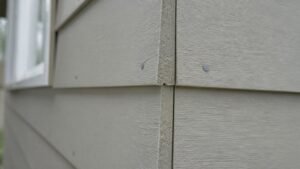
Pay attention to fasteners as well. Nail heads that have begun to back out, or rusty streaks running down from them, indicate that the wood holding those nails has been swelling and shrinking. Siding does not push its own nails out; moisture does it for them.
Boards That Have Stopped Being Straight
Wood that takes on moisture swells, and wood that dries out shrinks. Repeat that cycle through a few Washington winters and boards stop lying flat. Cupping along the length, waving across a run, or a course that no longer lines up with its neighbours all indicate that the material has been moving with the weather.
Movement matters beyond appearance, because a board that has cupped no longer seals against the one below it. The deformation becomes the next entry point, and the problem spreads sideways along the wall.
Smell is an underrated test. Rot has a distinct damp, earthy odour, and it is often detectable at a gap in the siding, at a vent, or inside a closet built against an exterior wall long before anything is visible outside. If a room on the weather side of the house smells different from the rest, that is information.
What the Paint Is Telling You
Paint ages evenly when the surface behind it is dry. Paint that fails in defined patches, lifting or bubbling in one area while the rest of the wall looks fine, is being pushed off from behind by moisture trying to escape.
The same goes for dark staining that reappears within weeks of washing. A stain that comes back is not dirt. It is water reaching the surface from inside the assembly, and it marks the wettest part of the wall.
Carpenter ants deserve a mention because they are common in this region and are frequently the first visible sign. Ants do not eat wood, they excavate it, and they strongly prefer wood that has already been softened by moisture. Ants coming and going from a wall are usually reporting a rot problem that started well before they arrived.
Where to Look First
Water almost always gets in at a transition rather than through the face of a board:
- Around windows and doors, where the flashing and the trim meet the cladding.
- At the bottom course, especially where siding sits too close to grade or decking.
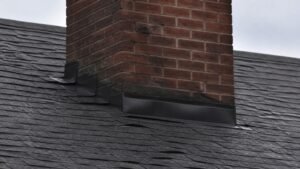
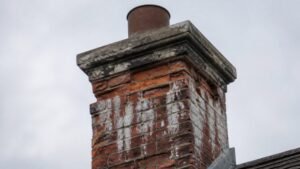
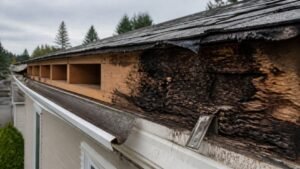
- Where the wall meets the roof, including the run alongside a chimney.
Caught at the board level this is siding repair. Caught after the sheathing has gone it becomes wood rot repair, and then a siding replacement of the affected elevation. The difference in cost between those three is substantial, and it is decided entirely by how early someone pressed on the wall.
Timing the inspection helps. Walk the walls during a sustained wet spell rather than in dry summer weather: damp patches, soft spots and failing joints are all considerably easier to find when the wall is actually being tested by rain.
Find It Early with Chimneyz LLC
None of the signs above require a ladder or a moisture meter. A walk around the house with your hand on the wall will find most problems while they are still repairs.
When something feels wrong, Chimneyz LLC will open up the suspect area and show you what is behind it before quoting any work. We serve King, Pierce, Snohomish and the surrounding counties.