4 min read
Is roofing tar a valid fix for leaking chimney flashing?
No. Tar is a temporary patch, not a repair. Flashing keeps water out through overlapping metal that lets the roof and the chimney move independently. Tar is rigid, it has a different expansion rate to both, and it cracks within a season or two. Worse, it has to be chiselled off before the flashing can be done properly, so it adds cost to the eventual real repair.
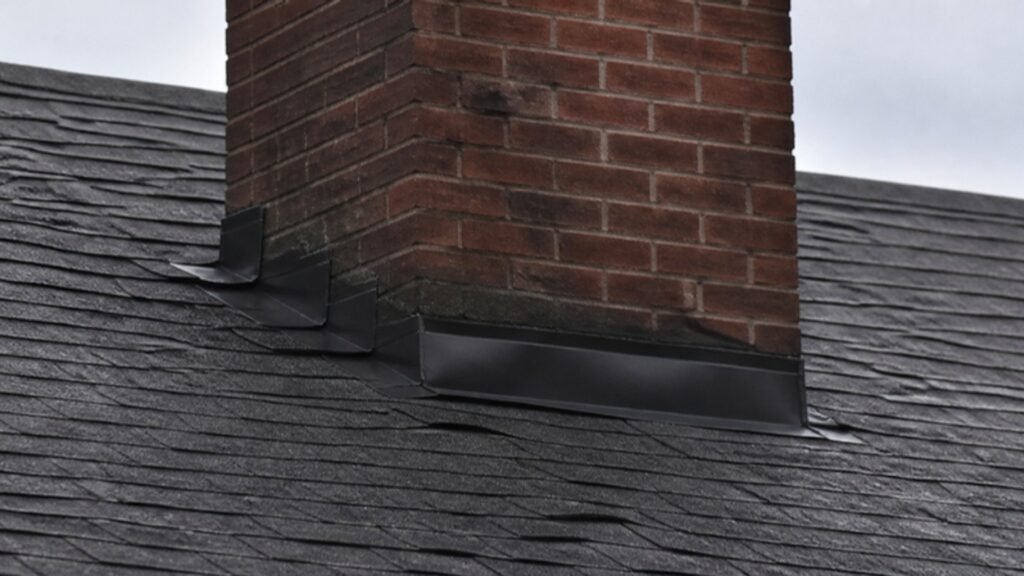
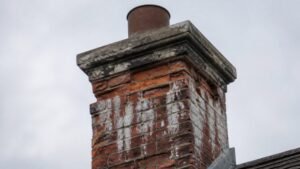
A black smear of roofing cement where the chimney meets the roof is one of the most common sights on an older Washington house. It is also one of the clearest signs that a leak was noticed and not fixed.
Tar stops water for a while. That is the whole of its contribution, and the bill arrives later.
One more piece belongs in the assembly on wider chimneys. A cricket, the small peaked structure built on the uphill side, splits water around the stack instead of letting it pond against the back wall. Chimneys over about thirty inches wide need one, and a missing cricket is a common reason a back-side flashing leak keeps returning no matter how many times it is sealed.
What Flashing Is Supposed to Do
A chimney and a roof are two structures that move independently. The roof deck flexes with load and temperature; the masonry barely moves at all. Any rigid seal between them is being asked to absorb that difference, and it cannot.
Correct flashing solves this with geometry instead of adhesive. Step flashing is woven into the shingle courses up each side, and counter flashing is set into a cut groove in the mortar joint and folded down over the step flashing. Water that gets behind the top layer lands on the one below and is carried back out. Nothing is sealed rigidly to anything, so movement does not matter.
Caulk and spray-on rubber coatings belong in the same category. They are sold as flashing repair and they behave the same way: a flexible film bonded across a moving joint, holding for a season or two and then splitting along the line of greatest movement, which is exactly where the water wants to go.
Why Tar Fails, Predictably
Roofing cement cures hard and stays hard. Every temperature swing moves the roof against the masonry, and the tar, bonded to both, has to take the strain.
It cracks. Usually within one or two seasons, and usually in a hairline that is invisible from the ground. Water then enters through a crack in an opaque black mass that hides exactly where it is going, which is why tarred flashing leaks are typically found by the ceiling stain rather than by looking at the roof.
There is a resale dimension as well. Visible roofing cement around a chimney is something home inspectors look for and write up, because it signals a known leak that was patched rather than repaired. It routinely becomes a negotiating point late in a sale, at a moment when there is no time to do the work properly.
The Hidden Cost
The part homeowners are rarely told is what tar does to the next repair:
- It has to be removed mechanically before new flashing can be fitted, which is slow work.
- It conceals how far the water has already travelled into the deck and the masonry.
- Layered up over several years it can damage the shingle courses it was smeared across.
So the cheap fix is not cheap. It defers a proper flashing repair and adds a demolition step to it, while the water carries on reaching the roof deck in the meantime.
Material choice is worth specifying. Galvanised steel is the cheapest option and the first to corrode in this climate; copper and lead-coated copper last far longer and tolerate the repeated small movements of a chimney joint without fatiguing. On a chimney you do not intend to revisit, the better metal is the cheaper decision.
What to Ask For Instead
A correct repair cuts a fresh reglet into the mortar joint, sets new counter flashing into it, and weaves new step flashing into the courses. Where the masonry joint is too eroded to hold a reglet, the joints get repointed first, because flashing set into crumbling mortar will not stay put.
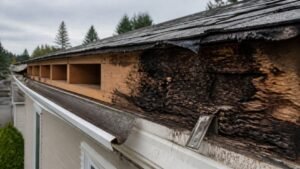
If water has already been getting in for a while, the deck underneath needs checking before anything is closed up. A chimney leak repair that stops at the surface leaves the rot in place.
A useful question for any contractor quoting this work: will the counter flashing be set into a cut groove in the mortar joint, or surface-mounted and sealed? Only the first is a flashing repair. The second is tar with a metal cover over it, and it fails on the same schedule.
Do It Once with Chimneyz LLC
If you can see black cement around your chimney, you are on borrowed time rather than on a repair. The honest version of this job is not dramatic and it does not need doing again.
Chimneyz LLC rebuilds chimney flashing properly across King, Pierce, Snohomish and the surrounding counties. Contact us and we will show you what is under the tar.