4 min read
What is the difference between a cracked chimney crown and a cracked flue?
The crown is the concrete slab on top of the chimney that sheds rain away from the masonry. The flue is the lining inside that carries combustion gases out. A cracked crown is a water problem: it lets rain into the brickwork. A cracked flue is a safety problem: it lets heat and carbon monoxide reach the structure. They need different repairs and carry very different levels of urgency.
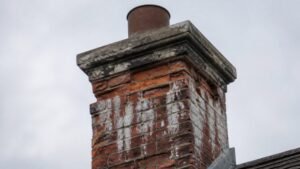
From the driveway, a chimney in trouble looks like a chimney in trouble. Two of the most common faults sit within a foot of each other at the top, and homeowners routinely describe one when they mean the other.
The distinction is worth getting right, because one of them is an expensive maintenance issue and the other is a reason not to light a fire.
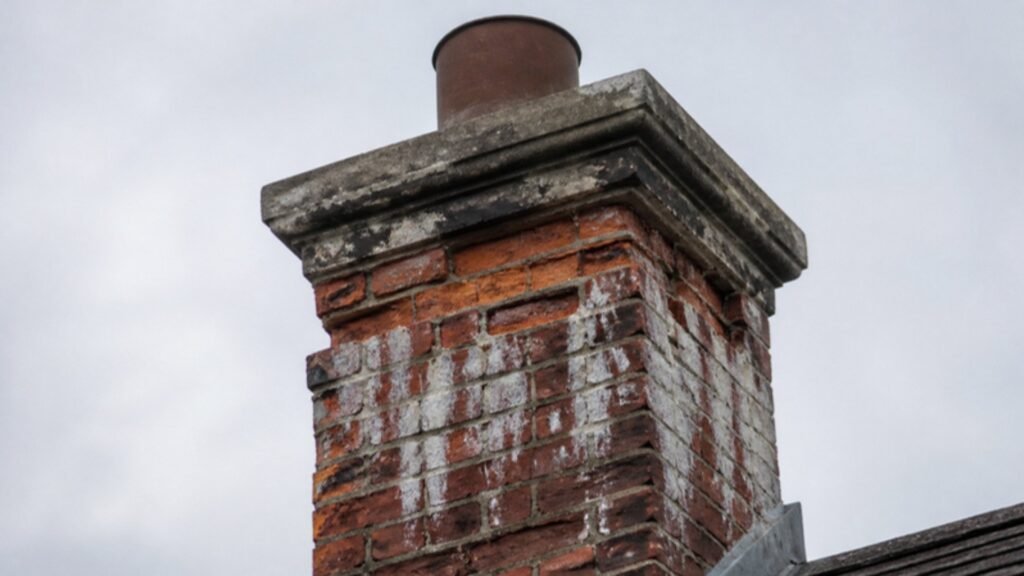
A clue that costs nothing to check: a correctly built crown overhangs the brick by an inch or more and has a drip edge cut into its underside, so water falls clear of the masonry. Many crowns in this region were poured flush with the brick face, which means that even an uncracked one has been running water straight down the chimney for its whole life.
The Crown Is the Roof of the Chimney
The crown is the sloped slab of concrete or mortar across the top of the masonry, surrounding the flue and overhanging the brick. Its only job is to throw rain clear of the structure below.
Crowns crack because they are exposed concrete in a wet, freezing-at-night climate, and because many were built far too thin. Once a crack opens, water runs straight into the chimney instead of off it. The consequences appear below as white efflorescence, spalling brick and eventually stains on the ceiling.
A third element confuses the picture further. The chimney cap is the metal hood over the flue opening that keeps out rain, birds and debris, and it is not the crown. Homeowners frequently use the two words interchangeably, which matters when describing a problem over the phone: a missing cap is an inexpensive part, a failed crown is masonry work.
The Flue Is the Chimney Inside the Chimney
The flue liner is the clay, metal or cast-in-place channel running up the inside. It carries smoke, heat and combustion gases out of the house while keeping them away from the surrounding brick and the framing that touches it.
A cracked flue does not leak rain. It leaks heat and carbon monoxide into the structure. Clay liners crack from thermal shock, usually from a chimney fire or from years of rapid heating, and the cracks are hairline and invisible from outside.
There is a relationship between the two faults worth understanding. A failed crown lets water run down the outside of the flue liner, and repeated wetting and freezing against clay is itself a cause of liner cracking. So a crown left unrepaired long enough tends to produce the more serious problem eventually.
Telling Them Apart from the Ground
A few signals point reliably one way or the other:
- White staining or flaking brick below the top means water is getting in, which points at the crown.
- Pieces of terracotta or thin clay shards in the firebox mean the liner is shedding, which points at the flue.
- A smell of smoke in rooms adjacent to the chimney, rather than in the fireplace, points at the flue.
The honest answer is that a visible crack in the crown can be assessed from the roof, while a flue cannot be assessed without a camera inside it. Anyone who tells you the liner is fine without having looked has not looked.
Urgency differs sharply. A cracked crown is damaging the chimney and should be dealt with before the wet season, but it is not a reason to stop using the fireplace. A cracked flue is a combustion-safety fault: until it is relined or the appliance is taken out of service, flue gases have a path to the structure.
Why the Repairs Are Not Interchangeable
A cracked crown is resolved by removing the failed slab and casting a new one with a proper overhang, a drip edge and an expansion joint around the flue. Sealant over the crack buys a season at most.
A cracked flue is resolved by relining. Relining restores a continuous, sealed channel and is not optional once a liner has failed, because the alternative is combustion gas reaching framing. A crown rebuild addresses the top of the chimney and does nothing for the liner, which is exactly the confusion this article exists to prevent.
If you are getting quotes, ask for the camera footage of the flue rather than a verbal summary. A scan takes minutes and produces a recording you can keep, compare against in future years, and show to an insurer if a claim is ever involved.
Find Out Which One You Have
The two faults often appear together, because a chimney that has been taking on water for years is also a chimney that has been through a lot of freeze-thaw. That does not make them one job.
Chimneyz LLC inspects the crown from above and the flue from inside, then tells you which problem you actually have. Book an inspection anywhere across our Puget Sound service area.